- English
- French
- German
- Portuguese
- Spanish
- Russian
- Japanese
- Korean
- Arabic
- Greek
- German
- Turkish
- Italian
- Danish
- Romanian
- Indonesian
- Czech
- Afrikaans
- Swedish
- Polish
- Basque
- Catalan
- Esperanto
- Hindi
- Lao
- Albanian
- Amharic
- Armenian
- Azerbaijani
- Belarusian
- Bengali
- Bosnian
- Bulgarian
- Cebuano
- Chichewa
- Corsican
- Croatian
- Dutch
- Estonian
- Filipino
- Finnish
- Frisian
- Galician
- Georgian
- Gujarati
- Haitian
- Hausa
- Hawaiian
- Hebrew
- Hmong
- Hungarian
- Icelandic
- Igbo
- Javanese
- Kannada
- Kazakh
- Khmer
- Kurdish
- Kyrgyz
- Latin
- Latvian
- Lithuanian
- Luxembou..
- Macedonian
- Malagasy
- Malay
- Malayalam
- Maltese
- Maori
- Marathi
- Mongolian
- Burmese
- Nepali
- Norwegian
- Pashto
- Persian
- Punjabi
- Serbian
- Sesotho
- Sinhala
- Slovak
- Slovenian
- Somali
- Samoan
- Scots Gaelic
- Shona
- Sindhi
- Sundanese
- Swahili
- Tajik
- Tamil
- Telugu
- Thai
- Ukrainian
- Urdu
- Uzbek
- Vietnamese
- Welsh
- Xhosa
- Yiddish
- Yoruba
- Zulu
What Are 16 Gauge 1/2 Inch Hog Rings Used For?
If you work in furniture manufacturing, automotive seating, or agricultural cage production, you have likely asked this question before. 16 gauge 1/2 inch hog rings are C-shaped metal fasteners made from 1.6mm wire with a 1/2-inch crown opening. They are precision-engineered to create permanent, high-tension mechanical bonds between two substrates. Production lines across upholstery, fencing, mattress assembly, and poultry cage manufacturing rely on these rings daily because they hold securely under vibration, moisture, and mechanical stress without loosening over time.

Understanding 16 Gauge 1/2 Inch Hog Rings: Dimensions, Types, and Materials
Core Dimensions and Size Reference
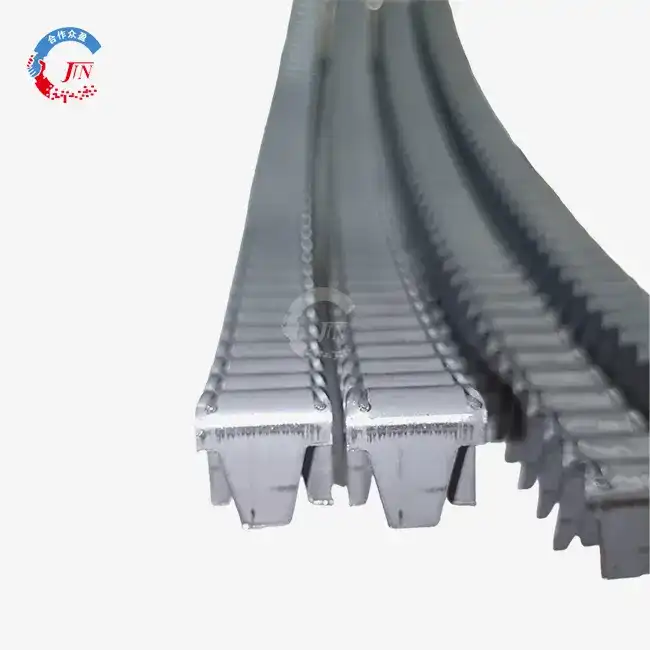
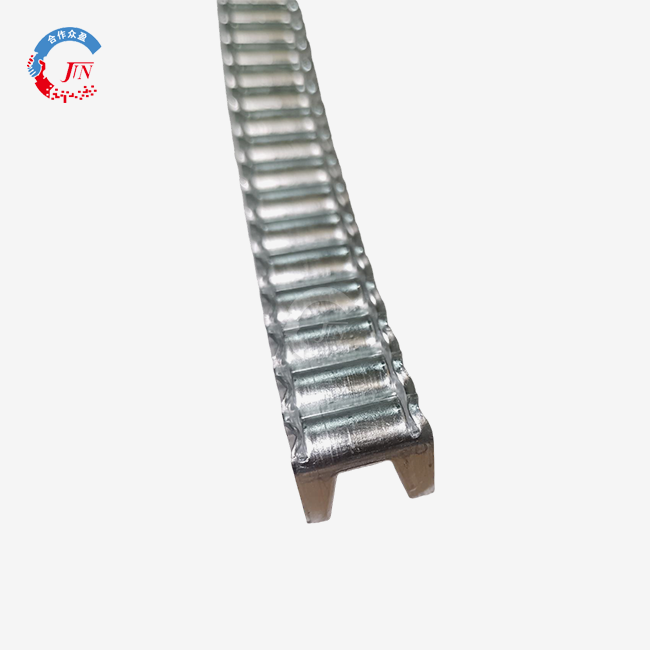
TJJZ says that the C17 specification is 16.9 mm wide and 8.7 mm tall. The diameter of the wire is about 0.0625 inches (1.6 mm), and the crown opens up to 1/2 inch before it closes. With these exact measurements, the ring feeds smoothly through both hand cutters and air tools. This keeps the tools from getting stuck, which wastes time and money on production lines.
Material Options: Galvanized Steel vs. Stainless Steel
Galvanized steel is a good choice for indoor uses like sofa frames and mattress assemblies because it has a good cost-performance balance and doesn't rust. 304 or 316 stainless steel is better at resisting corrosion in seaside, farming, or chemically exposed areas. TJJZ also sells zinc-aluminum alloy rings, which are great for outdoor fencing and cages because they keep rows stable and protect the surface for longer. Picking the right material has a direct effect on how long the end product will last.
Hog Ring Types and Tool Compatibility
Because their open shape lets you place them quickly and easily with one hand before joining, C-type hog rings are good for upholstery and cage assembly. In heavy gabion basket work, D-profile rings are used more often. Standard 16G pneumatic hog ring guns and manual hog ring pliers, such as models that are commonly used in industrial production lines, can work with TJJZ rings. Before buying a lot, you should always make sure that your tool needs a C or D shape.

Common Applications and Benefits of 16 Gauge 1/2 Inch Hog Rings
These rings are used in more fields than most buyers first think. The 1/2-inch crown size is the best for mid-weight upholstery fabric, wire mesh panels, and mattress spring-to-fabric connections because it has the right amount of grip surface area and material penetration depth.
Upholstery and Furniture Assembly
In the process of making sofas and office chairs, hog rings connect covers made of fabric or leather to frames made of springs and foam. The sharp points on TJJZ rings easily cut through thick layers of fabric. This speeds up the pinching step and makes installation by hand less tiring. One badly formed ring can cause the surface to wrinkle or the fabric to separate, so consistency in the dimensions is very important here.
Automotive Seat and Interior Fixing
These 16 gauge 1/2 inch hog rings are used by Tier 1 and Tier 2 car seat makers to attach seat covers and heating mats to foam frames inside the seats. The rings must not bend even after being subjected to constant vibration and occupant load cycles. Indoors, galvanized rings meet normal vehicle requirements. For areas near exhaust heat or moisture, alloy or stainless steel rings are better.
Fencing, Cage, and Agricultural Use
Companies that make wire cages, chicken equipment, and animal fencing depend on hog rings that don't rust to join mesh panel pieces together. According to ASTM B117, salt spray testing proves that rings that have been properly galvanized can resist corrosion for 72 to 500 hours or more. This means that the structure will stay stable outside for years. The 1/2-inch size works well for holding standard welded wire mesh in place, like in chicken coops and pet runs.
Comparison and Decision-Making: Choosing the Right Hog Rings and Tools
OEM Suppliers vs. Branded Products
A lot of people know brand-name goods from companies like Stanley or Arrow, but many large B2B buyers find that OEM suppliers following ISO 9001 manufacturing standards give the same level of accuracy at a lower cost per unit. TJJZ has been in business nonstop since 2015 and strictly controls its production to keep crown width variations within ±0.01mm so that production lines don't get pneumatic tool jams.
Manual Pliers vs. Pneumatic Tools
When mobility is important, manual hog ring pliers are a good choice for low-volume or replacement work. In industrial settings, pneumatic tools make a lot more work get done. Here is a quick list of tools that will work with each other to help you make your choice:
- Manual pliers suit small workshops, repair crews, and applications where air supply is unavailable.
- Pneumatic hog ring guns suit high-volume mattress, sofa, and cage production lines where speed and consistency are priorities.
- Tool profile check — confirm C-type compatibility before loading 16G rings into any pneumatic tool.
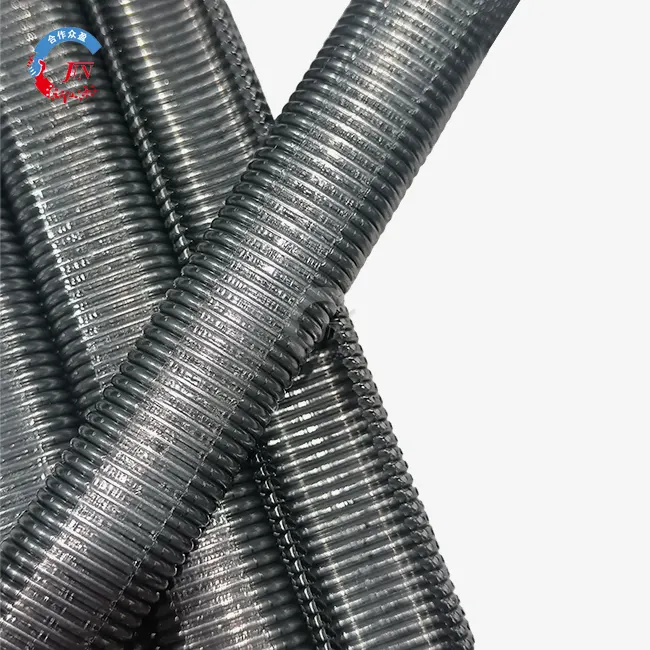
- Ring strip format — industrial packaging typically arrives collated in tape or glue strips for magazine loading, covering 2,500 to 10,000 rings per carton.
Most failure and jam problems can be avoided by making sure the right tool is matched to the shape of your ring.
Galvanized vs. Stainless: Cost vs. Environment
When used in normal freshwater settings, hot-dip galvanized rings last 10 to 20 years and are much cheaper than stainless steel rings. 304 or 316 stainless steel lasts longer and costs less to replace over its lifetime, making it a better choice for seaside fences, aquaculture cages, or places where animal waste is often present.
Procurement Guide: How to Buy 16 Gauge 1/2 Inch Hog Rings in Bulk?
Reliable Sourcing Channels
When looking for a supplier of 16 gauge 1/2 inch hog rings, production managers should look for companies that offer direct factory access, reliable inventory, and well-documented quality systems. TJJZ ships from Tianjin, which is close to Tianjin Port. This gives it an advantage for export orders because it can transport full pallets and has a low rate of cargo damage. As long as there is stock on hand, the standard production wait time is three to five days.
Custom Orders and Bundled Solutions
Coatings, wire tempers, and grouping forms need to be different for each industry. TJJZ does both OEM and custom manufacturing, and when standard specifications don't work for an application, they make things based on samples provided by the buyer. Bundled orders that include pneumatic tools that match or multi-gauge ring assortments (16G and 17G in both 1/2-inch and 3/4-inch sizes) make it easier to find what you need and make it easier to work with multiple vendors.
Negotiation Tips for Bulk Buyers
When the price of raw materials changes in the steel wire rod market every year, annual supply agreements keep your unit prices stable. When buyers agree to buying a certain amount every three or six months, they usually get better per-carton rates. Before you commit to a full production run, make sure you have salt spray test certificates and measurement inspection records for your first sample order.
Usage Tips, Safety, and Troubleshooting for 16 Gauge 1/2 Inch Hog Rings
Proper Installation Steps
Place the C-ring over the point where two surfaces meet, make sure the tool teeth are square, and apply steady pressure to close the gap. Do not use angled crimps because they weaken the closed ring and leave gaps that let the fabric slip. Before running the pneumatic tool to put the mattress together, make sure that all of the rings are in the right place so that the spacing across the spring border stays the same.
Troubleshooting Common Problems
Here are the three problems that show up most often in work settings. First, ring misfires are generally caused by rings that aren't the same size or tool teeth that are worn down. Second, rings often deform during crimping because the gages are not matched correctly. For example, if you use a 17G tool jaw to crimp a 16G ring, the ring will not close all the way. Third, rings with burrs or crown widths that aren't straight can cause tools to get stuck. All three types of failure are stopped at their source by TJJZ's strict control over dimensions and sharp-point check before shipping.
Safety and Storage Best Practices
When using gas hog ring tools, you should always protect your eyes. Keep rings in a dry, covered area to keep the surface from oxidizing too quickly, which can cause problems with feeding. Solvents can break down the glue that holds the strips together, which can cause the strips to separate inside the tool magazine. Do not expose collated ring strips to solvents.
Conclusion
The creation of mattresses, sofas, car seats, cages, and fences all benefit from the use of 16 gauge 1/2 inch hog rings. For most mid-weight fastening jobs, the 1/2-inch crown size and 16-gauge wire thickness give the right mix of grip strength and material flexibility. Choosing the right material—galvanized for cheap use inside or stainless steel for tough conditions outside—has a direct effect on how long a product lasts. When you pair precision-machined rings with tools that work with them, you avoid downtime in production and keep the quality of the output uniform across large order numbers.
FAQ
What size is a 16 gauge 1/2 inch hog ring exactly?
The C17 standard is 16.9 mm wide, 8.7 mm tall, and the wire thickness is about 1.6 mm. The 1/2-inch number refers to the crown's width before the ring is sealed shut.
Can I use these rings with any pneumatic hog ring gun?
Most standard 16G pneumatic tools can handle C-type rings in this size range, but before loading, you should check to see if the tool needs a C or D profile. Magazine jams can happen when dimensions vary more than ±0.01mm.
Is galvanized steel sufficient for outdoor cage use?
Hot-dip steel rings work well for 10 to 20 years in farming uses in the interior. If you live near the coast or somewhere hot, 304 stainless steel will last longer.
How many rings come in a standard industrial carton?
For pneumatic tool loading, industrial packing usually has between 2,500 and 10,000 rings per box, glued or taped together in strips.
Does TJJZ support custom specifications?
Yes, TJJZ does OEM and custom manufacturing. They offer sample-based production, custom finishes, and a range of gauges to meet the needs of different industries.
Get a Quote on Bulk 16 Gauge 1/2 Inch Hog Rings from TJJZ
Since 2015, TJJZ has sold industrial fastening Products. Our C17 16 gauge 1/2 inch hog rings are in stock and can be sent out within 3–5 days. We can make galvanized rings for putting together furniture or stainless steel rings for building outdoor cages. For large orders, we also offer OEM customization and production based on samples. Visit jinzhuangfastener.com or email our team at sales@jinzhuangfastener.com to get prices and technical details for your next large order.
References
1. ASTM International. (2020). ASTM B117: Standard Practice for Operating Salt Spray (Fog) Apparatus. ASTM International.
2. ASTM International. (2017). ASTM F1667: Standard Specification for Driven Fasteners: Nails, Spikes, and Staples. ASTM International.
3. ASTM International. (2016). ASTM A641/A641M: Standard Specification for Zinc-Coated (Galvanized) Carbon Steel Wire. ASTM International.
4. Parmley, R. O. (2000). Illustrated Sourcebook of Mechanical Components. McGraw-Hill.
5. Fastener Technology International. (2022). Wire Gauge Standards and Industrial Fastener Performance Testing. Fastener Technology International Magazine.
6. ISO. (2015). ISO 9001:2015 Quality Management Systems — Requirements. International Organization for Standardization.
Learn about our latest products and discounts through SMS or email