- English
- French
- German
- Portuguese
- Spanish
- Russian
- Japanese
- Korean
- Arabic
- Greek
- German
- Turkish
- Italian
- Danish
- Romanian
- Indonesian
- Czech
- Afrikaans
- Swedish
- Polish
- Basque
- Catalan
- Esperanto
- Hindi
- Lao
- Albanian
- Amharic
- Armenian
- Azerbaijani
- Belarusian
- Bengali
- Bosnian
- Bulgarian
- Cebuano
- Chichewa
- Corsican
- Croatian
- Dutch
- Estonian
- Filipino
- Finnish
- Frisian
- Galician
- Georgian
- Gujarati
- Haitian
- Hausa
- Hawaiian
- Hebrew
- Hmong
- Hungarian
- Icelandic
- Igbo
- Javanese
- Kannada
- Kazakh
- Khmer
- Kurdish
- Kyrgyz
- Latin
- Latvian
- Lithuanian
- Luxembou..
- Macedonian
- Malagasy
- Malay
- Malayalam
- Maltese
- Maori
- Marathi
- Mongolian
- Burmese
- Nepali
- Norwegian
- Pashto
- Persian
- Punjabi
- Serbian
- Sesotho
- Sinhala
- Slovak
- Slovenian
- Somali
- Samoan
- Scots Gaelic
- Shona
- Sindhi
- Sundanese
- Swahili
- Tajik
- Tamil
- Telugu
- Thai
- Ukrainian
- Urdu
- Uzbek
- Vietnamese
- Welsh
- Xhosa
- Yiddish
- Yoruba
- Zulu
1 Inch Hog Ring Supplier: Sizing, Material, and Bulk Order Planning
When you're buying a lot of fixing parts, getting the specs wrong costs you more than just money. It takes longer to make the parts too. What buying teams need to know about 1 inch hog rings is in this guide: how sizes work, which materials last in real-world industrial settings, and how to plan large orders that won't mess up your supply chain. The information here will help you make a faster, more confident buying decision, no matter if you work in upholstery, making cages, fencing, or car seats.

Understanding 1 Inch Hog Rings – Size, Types, and Applications
What Does "1 Inch" Actually Mean?
"1 inch" refers to the ring's crown width before it is closed. It has nothing to do with the width of the wire or the finished closed diameter. If you squeeze the ring together, it will tightly wrap around the material you want to pull. Between 9 and 11 gauges is the range of most wire gauges. This gives these rings the strength they need for tough industrial jobs. It's easier for the 1-inch version to connect stronger wire strands and multilayer surfaces than the 3/4-inch version, which can bend the closure more.
C-Style vs. D-Style Rings
C-style rings make a closed form that is wider, which is good for foam padding or couch fabric that is easy to bend. Because they make the gap flatter, D-style rings are the best choice for rigid wire-to-wire links in cage and fence building. Problems won't happen on the line if you know what style your pneumatic or manual tool needs before you order a lot of it.

Primary Industry Applications
The 1-inch crown size is made to work in tough situations. These rings are most often used in these three places:
- Civil engineering and erosion control: Gabion basket assembly and heavy silt fencing require rings that resist constant hydraulic pressure. The 1-inch span allows multiple thick wire strands to be joined within a single loop without weakening the structural connection.
- Heavy automotive and marine upholstery: Commercial trucking seats and nautical seating use thick multi-layer foam and vinyl. A 1-inch ring reaches deep enough to keep cover material from shifting under sustained physical stress.
- Industrial agricultural fencing: Attaching high-tensile chain-link mesh to 7-gauge tension wire demands a ring large enough to wrap around both materials cleanly. This size handles that job consistently.
When used for any of these things, the ring needs to be strong enough to not break. After that, every choice about material and size is based on that rule.
Choosing the Right 1 Inch Hog Rings for Your Project
Material Selection: Galvanized vs. Stainless Steel
ASTM A641 specifies requirements for zinc-coated steel wire, which is commonly used in applications such as 1 inch hog rings for animal enclosures and general fencing. For outdoor use, hot-dip galvanized steel provides corrosion protection under normal environmental conditions. In highly corrosive environments, such as areas exposed to strong chemicals or coastal salt spray, 316-grade stainless steel offers better resistance to chloride-induced corrosion, while 304-grade stainless steel is suitable for wet environments with limited salt exposure. The choice of material directly affects product service life, corrosion resistance, and applicable warranty coverage.
Load and Environmental Factors
The people who buy things for your company should do a few things before they approve a design. When putting the ring together, you should think about how much water or chemicals it will be exposed to and whether the base is soft or hard. It's possible that a ring that holds couch springs in place won't last long on a security fence outside that gets salty rain and road salt on it.
Hog Rings vs. Other Fastening Options
Do not use nails to wrap something around a round or cylindrical object in a circle. Instead, use hog rings. A staple can hold something to a flat surface, but it can't be used to make a loop. Because they are made in a closed loop, hog rings are less likely to come loose than staples. They can be used to link pillow springs, cage panels, and seat fabric because of this. That mechanical advantage makes up for the slightly higher cost per unit when there is a lot of stress.
Bulk Ordering and Procurement Planning for 1 Inch Hog Rings
Pack Sizes and Inventory Formats
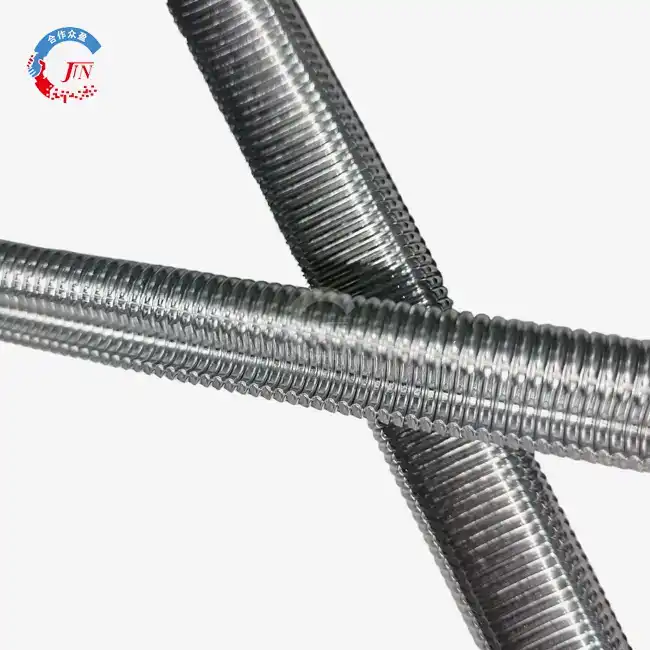
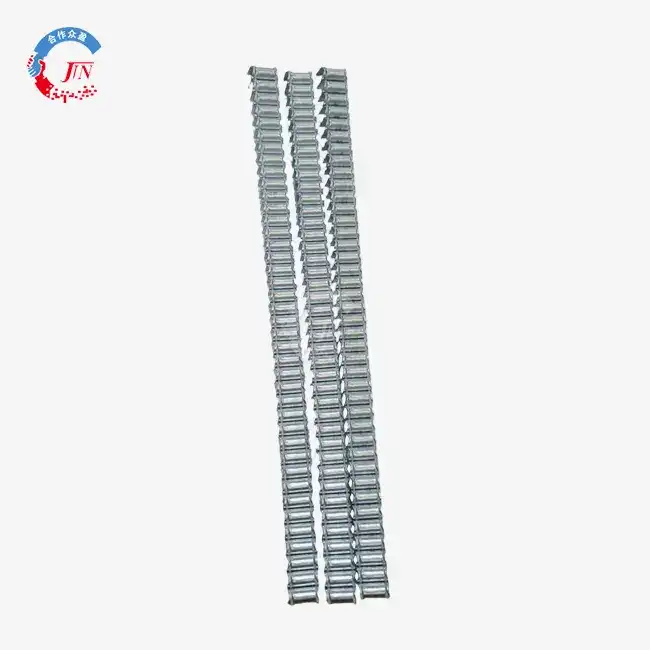
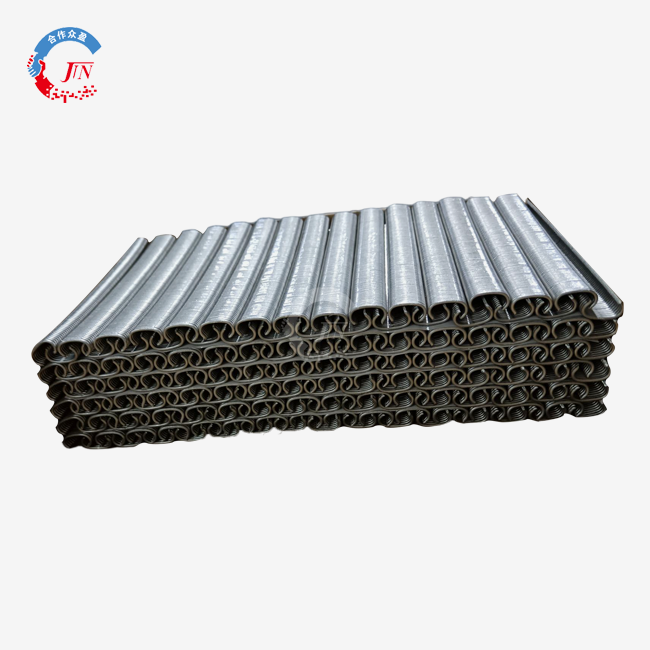
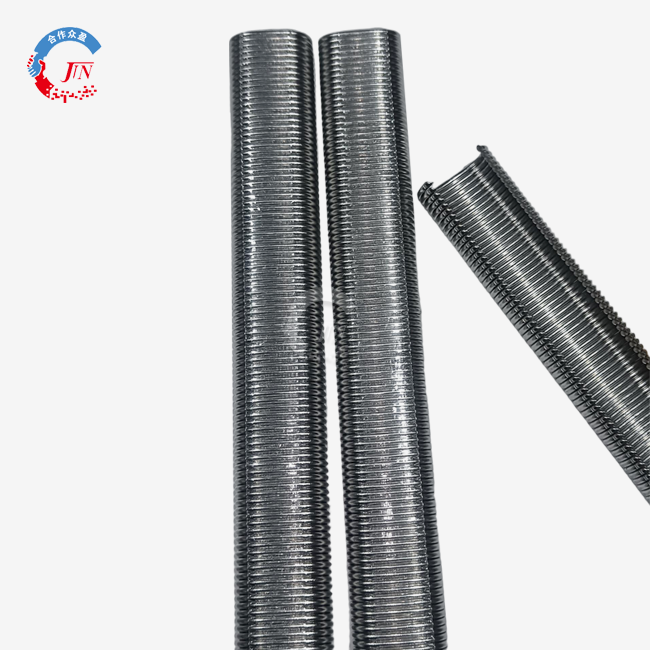
Normal industrial strips can hold forty to fifty rings at a time and are held together with tape that doesn't leave any residue. This keeps pneumatic tool magazines from getting clogged. Most of the time, rings are sold in boxes with 5,000 to 10,000 pieces or in big cases that are made to be shipped on a truck. The pack size should match the amount you use each week. This way, you won't have to move things around as much and won't run out of stock when production is high.
Wholesale Pricing and Cost Structure
The quality of the material is the main factor affecting costs on a large scale. Base prices for galvanized rings are often 30 to 50 percent lower than those for stainless steel rings per thousand units, although this can vary depending on wire diameter and finish type. When purchasing 1 inch hog rings, buyers can often secure better per-unit prices by combining orders across multiple SKUs, such as different gauges or styles under one purchase order. Factory lines setting up new assembly stations can also reduce capital costs by purchasing tool-and-ring packages together.
Supplier Evaluation Criteria for International Buyers
There is a set way to review a product before you buy it from a company in another country. These are the most important things for long-term supply security:
- Production certifications: Look for adherence to ISO 9001 manufacturing protocols and compliance with ASTM standards for wire and coating performance. These confirm that quality controls are institutionalized, not incidental.
- Lead time and inventory availability: A supplier that carries finished stock and confirms a production lead time of 3 to 5 days provides a meaningful buffer against demand spikes. Suppliers located near major export ports reduce transit variability.
- Sample-based manufacturing capability: For non-standard specifications — custom wire gauges, special coatings, or non-standard crown widths — a supplier who produces to your provided sample eliminates the guesswork in specification matching.
Certifications for production: Make sure the company follows the ISO 9001 rules for making things and the ASTM rules for wire and covering performance. These show that quality checks are part of the system and not something that was added on later.
Using and Handling 1 Inch Hog Rings – Best Practices
Correct Tool Selection and Ring Loading
Always make sure that your pneumatic hog ring tool can handle a crown thickness of 1 inch. If you try to use a 3/4-inch tool with 1-inch rings, the rings will not fit, and the tool will break. As it says on the box, load the strips so that the ring points are facing the right way. The wrong direction is one of the most common reasons why rings eject or only partially close.
Crimping Technique for Secure Closure
Before you start the tool, put the ring around the thing you want to cut. To get the door to close all the way, keep the air pressure steady. This is between 80 and 100 PSI for most gas types. Most of the time, rings "wing out," or don't close all the way, because the tool's wire gauge is too thick or the closing width is too large for the range of the ring. Check the air pressure and ring setting before you decide the tool is broken.
Avoiding Wire Fatigue and Long-Term Failures
Cyclic stress can affect 1 inch hog rings used in applications exposed to frequent vibration, such as car seats. Unlike rings intended for static applications, those used under dynamic loads require a wire grade suited to repeated stress. A smooth, burr-free finish helps prevent material tearing during installation and reduces potential crack initiation points, minimizing the risk of premature stress fractures.
Leading Brands and Supplier Reviews for 1 Inch Hog Rings
Established Market Brands
A lot of people know that Arrow and Bostitch make good hog ring collations that can be used by hand or automatically. People in the US who need fast shipping within the US can check out Uline. They sell a lot of different ring sizes. It is clear that providers of structural fences that meet the ASTM F1667 standards for driven bolts are the best.
Evaluating Chinese Manufacturing Partners
Rings made of galvanized steel or stainless steel can be bought from Chinese companies that have been exporting for a long time at fair prices. One company is different from another not because of where it is located, but because of how well it manages quality. You can trust a factory as much as a domestic one if it can show that it follows ISO 9001, can track where its raw materials come from, and has been steadily producing since at least 2015. For big buyers, it's also much cheaper.
What to Ask Before Placing a Bulk Order
Ask for a taste that has already been made before you order the whole thing. Make sure the wire gauge, covering weight, and cap width are right on your internal specification sheet. How quickly does the supplier answer technical questions? As long as they answer within a few hours, you can be sure that they will help you when your production line is running.
Conclusion
You need to know what the specification number means, how the material works in your setting, and what the supplier's infrastructure is like before you can find the right hog ring fastener. This will help keep your production line running efficiently. 1 inch hog rings offer a specific crown size that may provide fastening advantages that larger rings cannot, depending on the application. You can find a practical binding solution by matching the ring to the right wire gauge, material grade, and tool system. Before placing a large order, make sure you understand the lead time, quality standards, and whether the supplier has finished goods in stock.
FAQ
Are 1 inch hog rings strong enough for heavy-duty perimeter fencing?
Yes. As long as they are made of hot-dip galvanized steel and 9-gauge wire, these rings can hold the tension and shear loads that are needed for an industrial fence. If you connect high-tensile chain-link mesh to thick tension wire, the 1-inch top leaves enough room to make a strong closed loop.
How does stainless steel compare to galvanized in corrosion resistance?
If you hot-dip and coat steel, it can be used outside and meets ASTM A641 standards. The best material for places that might get saltwater, chlorides, or acidic chemicals is 316-grade stainless steel, since it doesn't rust or pit. This includes places by the sea or chicken coops.
Can I use 1 inch rings in a standard hog ring tool designed for smaller sizes?
No, a tool made for 3/4-inch rings won't work with 1 inch rings. If you need to work with 1-inch rings, you can only use tools that are rated for that crown width. It is possible for the tool to get broken or stuck during filling if you use the wrong one.
What causes rings to fail to close fully during installation?
Either the wire diameter is too large for the air pressure in the tool, or the target material diameter is larger than the ring's maximum closure range. Change the air pressure or pick a ring with longer legs before you try to fix the tool itself.
What is the standard quantity per box for industrial bulk orders?
Industrial sorting strips can hold up to 50 rings at a time, and 5,000 to 10,000 rings are often packed into big boxes at once. The person you buy from should be able to change the way the packaging is set up to fit how fast you make and store it.
Get a Bulk Quote on Hog Ring Fasteners from TJJZ
Tongjian Jinzhuang New Materials Technology Co., Ltd. (TJJZ) has been making hog rings and C-ring pins since 2015. They always have something in stock; your order will be made in 3–5 days, and they are close to Tianjin Port, so it's easy to send it overseas. In 3 minutes or less, our team that makes 1 inch hog rings answers questions. You can get a price right now for a sample or a big order by going to jinzhuangfastener.com or emailing us at userID@jinzhuangfastener.com.
References
1. ASTM International. ASTM A641/A641M: Standard Specification for Zinc-Coated (Galvanized) Carbon Steel Wire. ASTM International, 2021.
2. ASTM International. ASTM A580/A580M: Standard Specification for Stainless Steel Wire. ASTM International, 2020.
3. ASTM International. ASTM F1667: Standard Specification for Driven Fasteners: Nails, Spikes, and Staples. ASTM International, 2022.
4. Parmley, Robert O. Standard Handbook of Fastening and Joining. McGraw-Hill, 2018.
5. Rosato, Dominick V., and Donald V. Rosato. Reinforced Plastics Handbook. Elsevier Science, 2019.
6. ISO. ISO 9001:2015 Quality Management Systems — Requirements. International Organization for Standardization, 2015.
Learn about our latest products and discounts through SMS or email