- English
- French
- German
- Portuguese
- Spanish
- Russian
- Japanese
- Korean
- Arabic
- Greek
- German
- Turkish
- Italian
- Danish
- Romanian
- Indonesian
- Czech
- Afrikaans
- Swedish
- Polish
- Basque
- Catalan
- Esperanto
- Hindi
- Lao
- Albanian
- Amharic
- Armenian
- Azerbaijani
- Belarusian
- Bengali
- Bosnian
- Bulgarian
- Cebuano
- Chichewa
- Corsican
- Croatian
- Dutch
- Estonian
- Filipino
- Finnish
- Frisian
- Galician
- Georgian
- Gujarati
- Haitian
- Hausa
- Hawaiian
- Hebrew
- Hmong
- Hungarian
- Icelandic
- Igbo
- Javanese
- Kannada
- Kazakh
- Khmer
- Kurdish
- Kyrgyz
- Latin
- Latvian
- Lithuanian
- Luxembou..
- Macedonian
- Malagasy
- Malay
- Malayalam
- Maltese
- Maori
- Marathi
- Mongolian
- Burmese
- Nepali
- Norwegian
- Pashto
- Persian
- Punjabi
- Serbian
- Sesotho
- Sinhala
- Slovak
- Slovenian
- Somali
- Samoan
- Scots Gaelic
- Shona
- Sindhi
- Sundanese
- Swahili
- Tajik
- Tamil
- Telugu
- Thai
- Ukrainian
- Urdu
- Uzbek
- Vietnamese
- Welsh
- Xhosa
- Yiddish
- Yoruba
- Zulu
1 Inch Hog Rings for Industrial Bag Closing and Packaging Lines
When packaging lines demand a fastening solution that holds under pressure, 1 inch hog rings consistently prove their worth. These heavy-duty C-shaped metal rings, manufactured from high-tensile wire with a precise 1-inch crown width before closure, are purpose-built for securing large-diameter bag openings and multi-layer packaging substrates. Whether you're closing feed bags, industrial sacks, or export-grade packaging, the right hog ring eliminates the pop-out failures and closure gaps that slow production. Choosing the correct gauge, material, and ring style directly affects throughput and product integrity on your packaging line.


Understanding 1 Inch Hog Rings and Their Industrial Applications
What Makes the 1-Inch Size the Right Choice?
The 1-inch crown width works best when 3/4-inch or 1/2-inch rings are too small to go through thick materials or heavy-gauge wire bundles. The wider span makes it possible for the ring to stretch out less quickly while wrapping around the necks of gathered poly-woven or burlap bags to finish an industrial bag. In situations where the loop needs to be structurally sound while it is being loaded, this size is the norm.
Material Options and Their Impact
When packing things inside, electro-galvanized steel is best. Hot-dip galvanized steel is better for outdoor or high-humidity areas. And 304/316 stainless steel is best for food-grade or salty areas. ASTM A641 standards say that galvanized rings must have a consistent zinc coating. As long as the rings are made of stainless steel and meet the requirements of ASTM A580 wire, they will remain flexible during the pulling cycle. Procurement teams have to think about how the materials will be used to figure out which grades will work best and which will cost the most.

Common Industrial Sectors Using These Rings
That's not all that 1 inch hog rings are used for. They're also used to close bags. As part of civil engineering, gabion baskets are put together to stop soil erosion and keep the hydraulic pressure steady. They hold thick, multi-layer foam to metal seat frames in heavy cars and ships. They do the same thing inside business trucks. High-tensile chain-link mesh is attached to 7-gauge tension lines in farm fences. The 1-inch space between the wires lets you safely connect several thick wire strands without making the structure loops less strong.
How to Use 1 Inch Hog Rings Effectively in Industrial Packaging?
Choosing the Right Tool
You need the right tool to do a good job. Professionals always use wide-jaw pneumatic hog ring tools that are made to fit 1-inch rings for lines with a lot of rings. When you use the wrong tool, you'll get misfeeds, incomplete crimps, and mags that won't open. Regular 3/4-inch pneumatic tools can't feed 1-inch rings properly. Hand tools are good for small jobs or fixes, but when used in a production setting, they aren't as fast or reliable as gas systems.
Step-by-Step Fastening Process
There is a clear order to putting 1 inch hog rings in the right place. First, make sure there are no air pockets by pulling the bag's neck tight. Second, put the ring jaws around the material that has been gathered where it says "close" on the picture. Third, to close the ring, give it one full squeeze. There shouldn't be a gap or wing-out deformation that you can see in a crimped ring. If the wire size is larger than the air pressure that comes with the tool, the ring tips might not completely meet. Just before you start making things, make sure that the PSI setting on your compressor is the right one for the tool.
Reducing Downtime on High-Volume Lines
On package lines, rings getting stuck is one of the most common issues that stops work. Almost always, the issue is with the ring itself—in this case, an uneven crown width or sharp edges on the wire ends. Pneumatic magazines can easily feed rings that are made to very tight specs and have a smooth, burr-free finish. In places that process thousands of bags every shift, even small breaks in the feed can cause big drops in output. To keep the line up and running, pick rings with wires that are all the same diameter and have clean ends.
Comparing 1 Inch Hog Rings with Alternative Fastening Solutions
Hog Rings vs. Staples and Zip Ties
Compared to staples, hog rings offer a three-dimensional closure that grips cylindrical or bundled materials far more securely. Staples are flat and work well on flat substrates like fabric or cardboard, but they lack the wrap-around holding power needed for bag neck closures under tensile load. Zip ties are faster to apply manually but degrade under UV exposure, fail at temperature extremes, and cannot match the shear strength of a crimped steel ring in heavy industrial packaging.
Here is a direct comparison across the three primary closure methods:
- Hog Rings (1 inch): High tensile strength, permanent mechanical closure, compatible with pneumatic automation, suitable for metal-detectable packaging lines.
- Staples: Fast and low cost for flat substrate work, but not suited for gathered or bundled closures.
- Zip Ties: Easy manual application, but limited heat and UV resistance, with no metal-detection compatibility.
These differences matter most when packaging lines serve food production or export customers with strict inspection requirements. A ring made from stainless steel passes metal detection checks, which no plastic tie can replicate.
Stainless Steel vs. Galvanized: Which to Specify
316-grade stainless steel is the right choice for coastal environments or food-contact applications because its molybdenum content resists chloride-induced pitting corrosion. Hot-dip galvanized rings are the practical choice for general industrial packaging, offering strong outdoor durability at lower material cost. The decision comes down to the operating environment and the buyer's acceptable maintenance interval.
1 Inch vs. 1.25 Inch Rings
For standard bag necks with moderate material thickness, 1-inch rings close cleanly to a finished diameter between 1/4 and 1/2 inch. For applications involving very thick synthetic bags or double-wall packaging, a 1.25-inch ring may be required to achieve full closure without the tips failing to overlap. Procurement engineers should verify the finished closure diameter specification before committing to a ring size.
Procurement Guide: How to Buy the Best 1 Inch Hog Rings for Industrial Use
Key Quality Metrics to Evaluate
A ring's quality is judged by three technical factors: how consistent the wire gauge is (9-gauge or 11-gauge, depending on the load needs); how well the coating sticks (no flaking during crimping); and how close the crown width is to its actual size. Tools that use air can have trouble feeding if the rings are even 0.5 mm off from what the crown width says it should be. Ask a new provider for a dimensional certification or a production check report before you give them the go-ahead for 1 inch hog rings.
Evaluating B2B Suppliers
If you want to find a company that makes industrial hog rings, you should check their production wait times, minimum order amounts, stock backup capacity, and how consistent their sizes have been across batch orders in the past. When it comes to process control and getting supplies, a source whose production has been stable since at least 2015 is usually a good one. Being near a large export port like Tianjin Port also cuts down on the time it takes to get goods to buyers in the U.S. and the chance that the goods will get damaged.
Wholesale and Bulk Purchasing Channels
The most cost-effective way to get a lot of goods that need to be ordered over and over is to go straight to the manufacturer. When a buyer buys in bulk, the distributor doesn't get to keep the extra money they make, and the buyer can get samples made to fit their needs. There are yearly deals for fasteners that a lot of packaging companies with large production lines take advantage of. This keeps prices stable and makes sure that stock is spread out evenly when production is high.
Maximizing Industrial Packaging Efficiency with 1 Inch Hog Rings
Routine Quality Inspection Practices
Before each batch of hog rings goes into production, I think you should set up a simple way to check them. Check a box of 20 rings to make sure that all of them have the same crown width, surface finish, and coating. Any batch that has clear burrs, rust spots, or size differences should be thrown away. Unplanned downtime of hours can be avoided with this 10-minute check. If a bad batch gets to the pneumatic tool magazine, this check stops it.
Supplier Responsiveness as a Productivity Factor
When it comes to how fast they can make things, packaging line managers often forget that the time it takes for suppliers to respond is a factor. The line can get back to work faster when the provider replies quickly, rather than taking days, during the middle of a shift when an inspection fails on a batch of rings or when a size standard needs to be changed. When a supplier does their own research and development (R&D) and sample production, they can also change their plans when customer needs change without having to start the whole production cycle over.
Future Trends in Industrial Fastening
With new coating technologies and finishes made of zinc-aluminum alloy, galvanized rings are less likely to rust than they used to be. It works much better in salt-spray tests for these coatings than regular electro-galvanized items. Because of this, they are a good choice for packing jobs near the water or in damp places. As packaging lines become more automated, it will be even more important to make rings that are the right size to keep feed rates steady.
Conclusion
It's not easy to choose the right ring size, material, and provider for your packing line. It has a big effect on the quality of the seals, the line's uptime, and the costs of running the business in the long run. Industrial packing lines that handle a lot of items need 1 inch hog rings with a crown width of 1 inch that are all the same size, have clean-cut ends, and stick well to coatings. The place where you will be using the steel should help you choose between galvanized steel and stainless steel. It is important to always think about more than just the unit price. You should also think about how well the provider can handle orders, keep goods on hand, and reply quickly.
FAQ
Are 1 inch hog rings reusable?
These rings are designed as single-use fasteners. Once crimped, the metal work-hardens at the closure point, and attempting to re-open and re-apply the ring weakens the wire and compromises closure strength. For any application where packaging integrity is critical, always use a new ring.
What is the difference between upholstery hog rings and packaging hog rings?
Upholstery rings are typically lighter gauge—often 15 or 16 gauge—and designed for fabric-to-frame attachment in sofas or automotive seats. Industrial packaging rings operate at heavier gauges (9 to 11 gauge) with tighter dimensional tolerances to withstand the tensile loads of bag closure under weight. Specifying the wrong grade for packaging will result in ring failure at the closure point.
What tools do I need to apply 1 inch hog rings?
You need a wide-jaw pneumatic hog ring plier rated for 1-inch rings, connected to a compressed air supply set to the manufacturer's specified PSI. Standard 3/4-inch tools will not accept 1-inch rings. For low-volume or field repair work, a heavy-duty manual hog ring plier designed for 1-inch rings is a functional alternative, though it cannot match the cycle speed of a pneumatic system.
Can I use galvanized rings in a food packaging environment?
Standard galvanized rings are not recommended where direct food contact occurs. For food packaging lines requiring metal-detection compliance and corrosion resistance, 304 or 316 stainless steel rings are the appropriate specification.
Get Reliable 1 Inch Hog Ring Supply from TJJZ
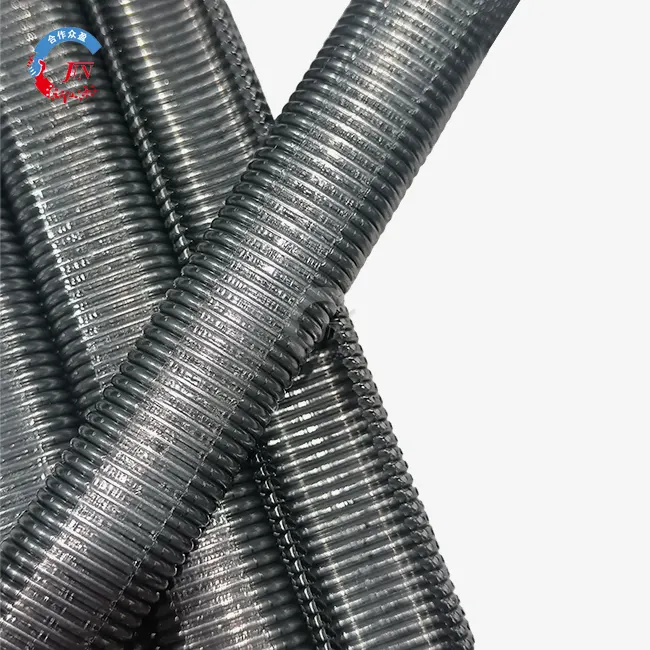
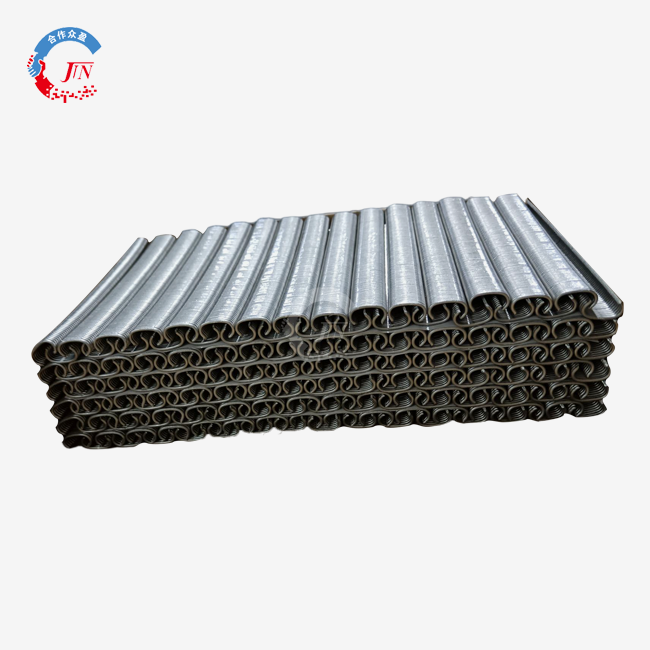
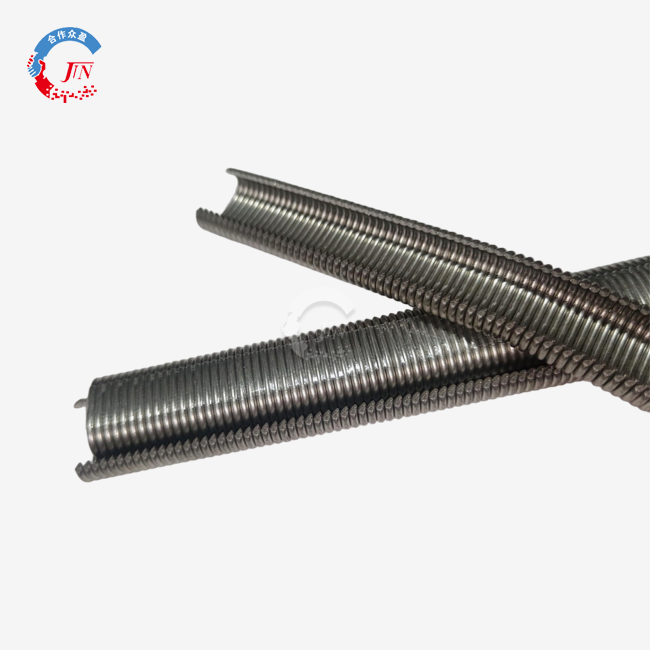
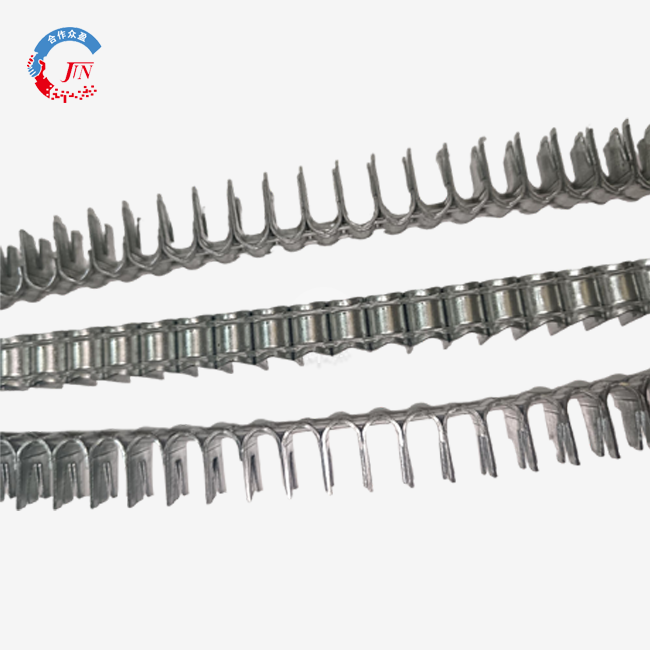
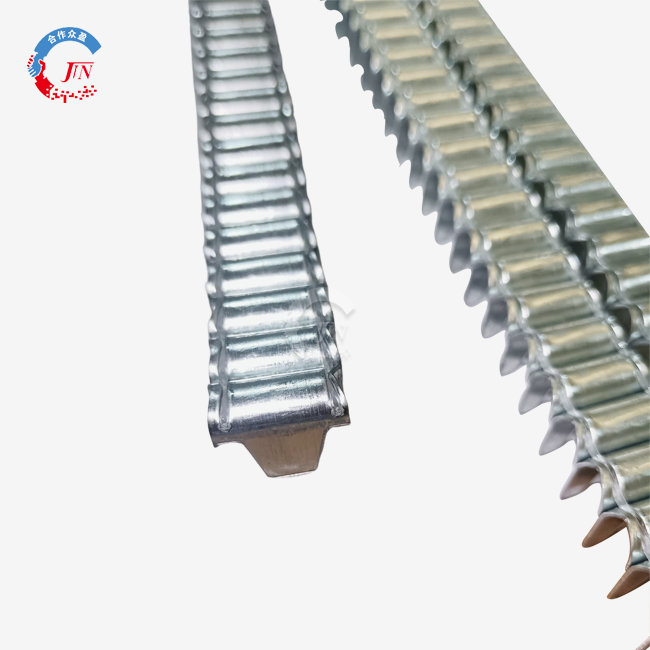
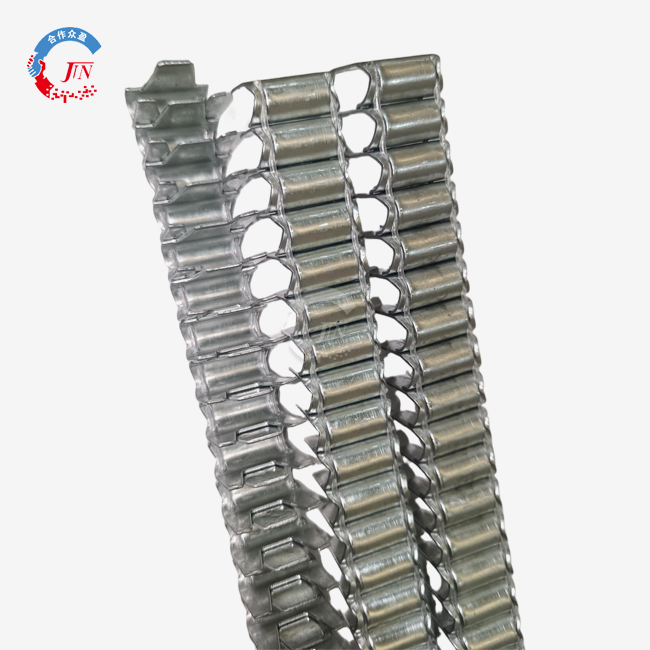
Since 2015, Tianjin Jinzhuang New Materials Technology Co., Ltd. (TJJZ) has helped businesses with their fastening needs. There is an oil film on our C-ring staples to protect them. They're no longer stuck together, and gas tools have no trouble cutting them. As long as you ask a question, we'll answer it within three minutes, and we ship full boxes from Tianjin Port, so your packing line doesn't have to stop. To get samples and prices on the 1 inch hog rings we sell, email us at userID@jinzhuangfastener.com or visit jinzhuangfastener.com.
References
1. ASTM International. ASTM A641/A641M: Standard Specification for Zinc-Coated (Galvanized) Carbon Steel Wire. ASTM International, 2020.
2. ASTM International. ASTM A580/A580M: Standard Specification for Stainless Steel Wire. ASTM International, 2021.
3. Packaging World Magazine. Fastening Systems in Industrial Bag Closing Operations. Packaging World, 2022.
4. Modern Materials Handling. Automation and Fastener Compatibility on High-Volume Packaging Lines. Peerless Media, 2023.
5. Flexible Packaging Association. Material Performance Standards for Industrial Flexible Packaging Closures. FPA Industry Report, 2021.
6. Wire & Cable Technology International. Wire Gauge Standards and Coating Performance in Industrial Fastener Manufacturing. Worcester Controls Publications, 2022.
Learn about our latest products and discounts through SMS or email