- English
- French
- German
- Portuguese
- Spanish
- Russian
- Japanese
- Korean
- Arabic
- Greek
- German
- Turkish
- Italian
- Danish
- Romanian
- Indonesian
- Czech
- Afrikaans
- Swedish
- Polish
- Basque
- Catalan
- Esperanto
- Hindi
- Lao
- Albanian
- Amharic
- Armenian
- Azerbaijani
- Belarusian
- Bengali
- Bosnian
- Bulgarian
- Cebuano
- Chichewa
- Corsican
- Croatian
- Dutch
- Estonian
- Filipino
- Finnish
- Frisian
- Galician
- Georgian
- Gujarati
- Haitian
- Hausa
- Hawaiian
- Hebrew
- Hmong
- Hungarian
- Icelandic
- Igbo
- Javanese
- Kannada
- Kazakh
- Khmer
- Kurdish
- Kyrgyz
- Latin
- Latvian
- Lithuanian
- Luxembou..
- Macedonian
- Malagasy
- Malay
- Malayalam
- Maltese
- Maori
- Marathi
- Mongolian
- Burmese
- Nepali
- Norwegian
- Pashto
- Persian
- Punjabi
- Serbian
- Sesotho
- Sinhala
- Slovak
- Slovenian
- Somali
- Samoan
- Scots Gaelic
- Shona
- Sindhi
- Sundanese
- Swahili
- Tajik
- Tamil
- Telugu
- Thai
- Ukrainian
- Urdu
- Uzbek
- Vietnamese
- Welsh
- Xhosa
- Yiddish
- Yoruba
- Zulu
1 Inch Hog Rings for Large Wire Mesh Panels and Cage Assembly
Most people don't realise how important the fastener they choose is when they need to join heavy-gauge wire mesh panels or make a cage assembly that is safe. 1 inch hog rings are carefully made C- or D-shaped wire fasteners with a 1-inch crown width before they close. They are the best way to secure thick, multi-strand wire joints because smaller rings just can't wrap around them well enough. This guide tells buying professionals, production managers, and engineers everything they need to know, from technical specs and installation steps to how to choose a seller and how to order in bulk.


Understanding 1 Inch Hog Rings and Their Applications
Before you buy a lot of them, it's helpful to know what makes a 1-inch ring different from other fasteners and how that difference in size affects performance.
What Sets the 1-Inch Size Apart?
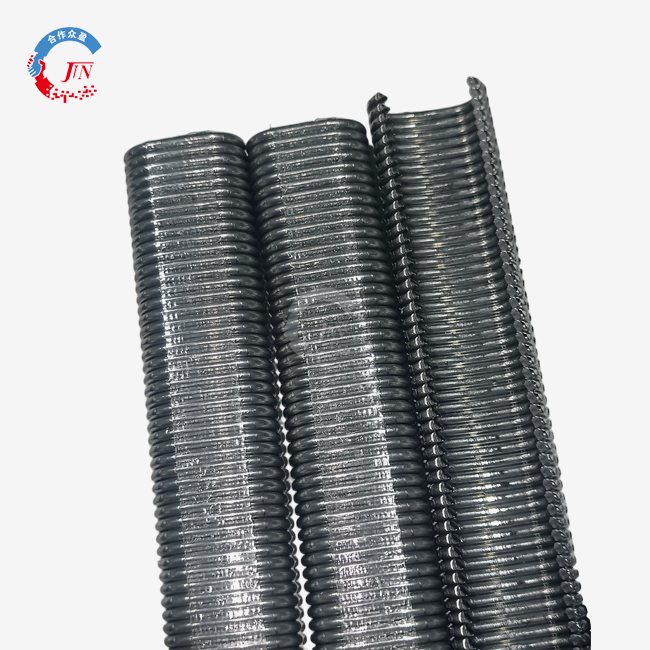
Most hog rings have crown lengths of ½-inch or ¾-inch, which are fine for thin sofa fabrics. The crown opening is 1 inch wide, which is wide enough to securely wrap around 9-gauge or heavier mesh wire, multilayer substrates, or bundled wire intersections. When the leg is closed, its width is usually between ¼ and ½ of an inch. This makes a strong mechanical lock that can't be pulled out even when force is applied for a long time.
Core Material Options
Industrial buyers mostly choose between two main types of materials. Hot-dip galvanised steel that meets ASTM A641 standards is a cost-effective way to protect against rust in most outdoor and farming areas. 304 or 316 stainless steel is the standard for places that are exposed to chloride, like coastal installations, aquaculture cages, or chemical processing plants. Because it is better at resisting chloride-induced pitting, the 316 grade is used in marine and food-grade applications.

Primary Industrial Applications
People want these rings in a lot of different areas. They are the standard way to put together gabion baskets that must be able to withstand constant hydraulic pressure in civil engineering and erosion control. They connect high-tensile chain-link mesh to 7-gauge tension wires to make heavy agricultural fencing that keeps animals inside. When making chicken coops and pet pens, they make wire-to-wire joints that are tight, don't rust, and keep their shape over years of daily use. Because they can be used in so many situations, procurement managers in many different industries look for a single, reliable source to get their supplies.
How to Use 1 Inch Hog Rings for Large Wire Mesh Panels and Cage Assembly?
Even the best ring won't work right if it's not put on correctly. On the production lines, these are the steps that plant workers always take.
Pre-Assembly Preparation
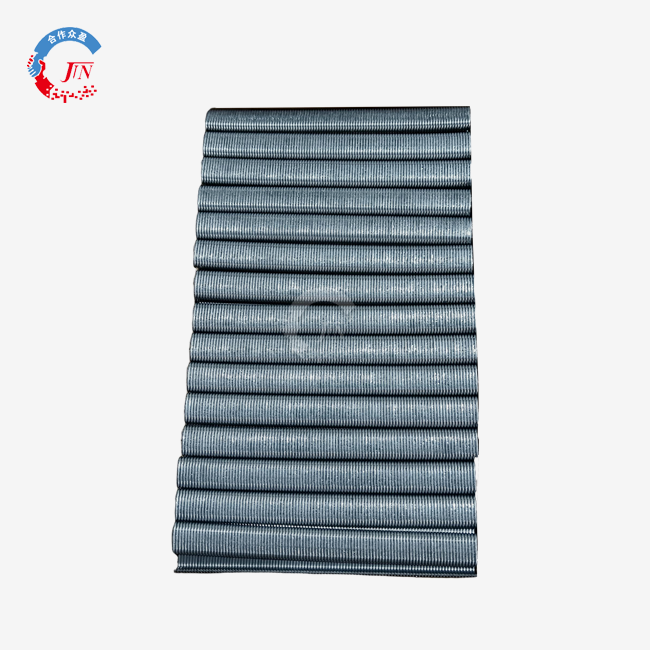
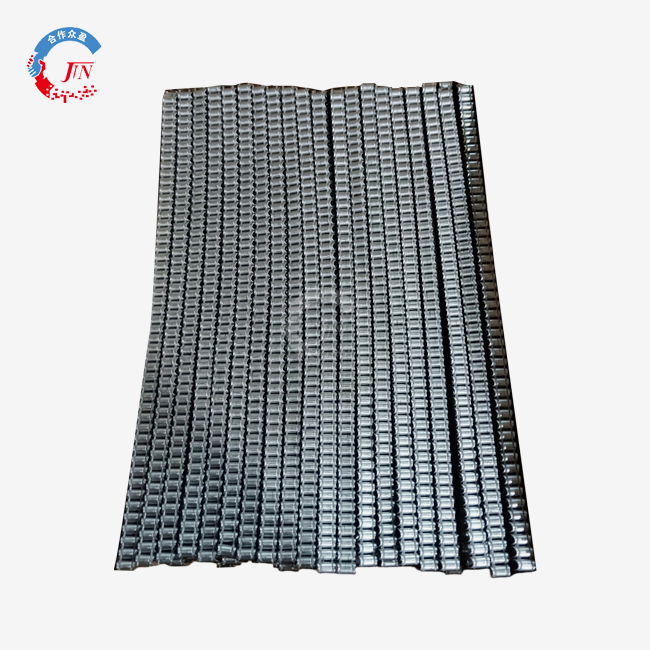
Before you use any tools, make sure that all of the wire mesh pieces are lined up in the right way. Make sure that the mesh spacing and wire thickness match the 1 inch hog rings ability to close. Place panels flat on a stable workbench and use temporary clamps to keep them in place. Then, make sure that the ring strips feed correctly into the tool magazine. Standard industrial strips have 40 to 50 rings that are joined together with residue-free tape. This keeps the tool magazine from getting dirty while it's running all the time.
Tool Selection and Ring Placement
Make sure the tool fits the ring size every time. For a 1-inch ring, you need a wide-jaw pneumatic hog ring tool or heavy-duty manual pliers made for the wider crown. If you use a standard ¾-inch tool, the ring will deform and misfire. Set up each ring at the point where two wires meet, then use steady, even pressure to squeeze or trigger the tool and make sure the closure is fully crimped with no "winging out." To spread the load out evenly, space rings at regular distances, usually every 4 to 6 inches along the edge of the panel.
Safety and Troubleshooting
Personal protective equipment is a must. Safety glasses and gloves that won't cut protect against wire spring-back. If rings don't close all the way, it's usually because pneumatic tools don't have enough air pressure or the wire gauge is bigger than the ring's rated closure diameter. Instead of pushing the tool, change the air pressure little by little. If the ring's leg length doesn't match the combined wire diameter being joined, it's likely that the ring will pop out under load. To fix this, switch to a ring with longer leg length.
Comparing 1 Inch Hog Rings to Other Fastening Solutions
There are a lot of ways to do things other than hog rings that people who work in buying often compare them to. These big-picture things show how they stack up.
Size Comparison: 1-Inch vs. Smaller Rings
When heavy-gauge or multi-strand wire is put together, a 1-inch ring and a ½-inch ring work in very different ways. Some rings aren't big enough to neatly wrap several strands, so they only close partially and become less tight over time. There is a bigger hole in the 1-inch ring, which can hold thicker packages of material and make the mechanical lock harder. The 1-inch size makes it less likely that a large wire mesh panel's closure will fail during assembly, so it costs less to fix them.
Hog Rings vs. Staples and Zip Ties
No, pins are not a good way to connect lines in a full circle. It's easy to put cloth on frames and make chairs with them. UV light, chemicals, or regular wear and tear can damage zip ties quickly. This is true even though they are simple to put together. This isn't good for farm mesh buildings or structures outside. Two pieces of metal are joined together with hog rings in a way that doesn't crack, loosen, or break down over time. When it comes to cage systems, rings are much cheaper to own in the long run than plastic hooks.
Stainless Steel vs. Galvanized: Selecting the Right Coating
With galvanised steel rings, you can use them outside in most weather, and they cost less per unit. Stainless steel rings don't need to be changed as often in acidic places for the same price as other rings. This saves money over time. Stainless steel is always the best choice for parts that will be exposed to water, salt spray, or chemicals. Galvanized rings are a good choice for dry or partly covered places because they last longer and cost less at first.
Procuring 1 Inch Hog Rings for Large-Scale Use
Decisions about buying in bulk aren't just based on unit price. The real cost of a fastener program is affected by how reliable the supply is, how consistent the dimensions are, and how well the tools work with each other.
Supplier Evaluation Criteria
When production managers and quality assurance teams look at suppliers, they should focus on three things. First, consistency in size: 1 inch hog rings must arrive within tight crown-width tolerances so that automated lines don't make mistakes when feeding them. Second, the quality of the coating: ASTM A641 says that hot-dip galvanised coatings must be met, and ASTM A580 says that stainless grades must meet wire standards. Third, production lead time: companies with continuous assembly lines can't handle supply delays. A supplier with a 3- to 5-day production lead time and confirmed inventory stock lowers procurement risk by a large amount.
When buying teams make short lists of sellers, these are the main things they look for:
- Dimensional consistency: The crown width tolerance must be within ±0.02 inches so that pneumatic systems don't get stuck.
- Coating compliance—ASTM A641 for galvanised wire and ASTM A580 for stainless steel wire—makes sure that the pinch behaviour is reliable.
- Inventory availability—Suppliers with ready-to-ship goods lower the risk of lead times for production schedules that need to make a lot of items quickly.
- Customisation support—original equipment manufacturers (OEMs) often need non-standard gauges, coatings, or packaging configurations; the ability to produce samples is a key differentiator.
These requirements stop the most common buying mistakes: misfed rings that stop tools from working, rust that breaks down too soon, and supply gaps that stop production lines.
Bundling Tools with Ring Orders
Getting ring strips and wide-jaw installation tools that work with them from the same supplier makes setup easier, makes sure that the tools will work with the rings right away, and cuts down on the time needed to fix problems when a new production line starts up. A lot of industrial suppliers offer packages that include both consumables and tools, and annual agreements cover the ongoing supply of rings.
Enhancing Wire Mesh Assembly Efficiency Using 1 Inch Hog Rings
Product quality isn't the only thing that affects how much is consistently made; process design and repair schedules are also very important.
Batch Processing for Throughput Gains
Putting panel assembly into separate batch stations—pre-alignment, ring placement, and inspection—significantly decreases the time needed to put together a single unit. Instead of switching between stations during a batch, assigning a dedicated operator to each one cuts down on setup mistakes and makes it easier to plan inventory levels by keeping ring consumption rates stable.
Maintenance and Inspection Protocols
In high-humidity or outdoor areas, complete assemblies should be checked every six months. At stress points, check galvanised rings for zinc-layer degradation. If you see corrosion spreading, replace any rings that are showing this before it affects the strength of the joint. To keep feed performance stable, pneumatic tools should be oiled every day and magazine lines should be cleaned once a week.
Real-World Validation
A medium-sized company that makes chicken cages switched their 10-gauge panel line from twist-wire joining to pneumatic 1-inch ring assembly. They saw a 34% drop in the time it took to put together each cage and no structural joint failures during a 12-month production run. This is a direct result of using the right rings and installing them consistently.
Conclusion
Finding the right connection for big wire mesh panels and cages changes how quickly they can be made, how long they last, and how much they cost. You need to use the right grade of material and the right tools to make a mechanical joint that works well on farms, factories, and construction sites. 1 inch hog rings should be the width of the crown. You can keep lines running smoothly and build structures that last longer by making sure the ring specs are right for the job. This is true whether your team is putting together a lot of cages or strong fence panels.
FAQ
Are 1 inch hog rings suitable for outdoor cage installations?
Yes, hot-dip galvanised rings can be used for most outdoor gardening and fence jobs. There is less corrosion in structures made of 316-grade stainless steel rings when they are used near the sea or in places with a lot of humidity. This means that structures last longer without breaking down more quickly.
Can I use these rings with a standard ¾-inch pneumatic tool?
Not at all. In order to cut rings that size, you need a pneumatic tool with wide jaws. The crown width is 1 inch. A tool that is too small might not work right, not close all the way, or even break. Make sure the tool and ring will work together before you start making things.
What wire gauge do 1-inch hog rings typically accommodate?
Different lengths of 1-inch rings are made from 9-gauge or 11-gauge wire, and handle mesh wire can be anywhere from 12 gauge to 7 gauge. Check the width of the wire group against the bigger end of the ring before you place your order.
How do I prevent rings from "winging out" during installation?
When the air pressure is too low, or the wire's width is too big for the ring to hold it closed, it wings out. As the air pressure is slowly raised, check to see if the total wire diameter is within the range of what the ring can handle.
What quantity per strip is standard for pneumatic loading?
There are usually forty to fifty rings on most industrial strips with rings. Glue or tape that doesn't leave any waste in the tool magazine holds them together. This makes it possible for them to work well even during long shifts.
Source Your 1 Inch Hog Ring Supply Through TJJZ
Since 2015, TJJZ (Tianjin Jinzhuang New Materials Technology Co., Ltd.) has offered clips made of galvanised steel and stainless steel. To get things done quickly, they keep a lot of stock on hand and need 3 to 5 days to make something. We can meet the needs of OEMs, make special finishes, and agree to supply 1 inch hog rings every year because we make them. If you go to jinzhuangfastener.com or email userID@jinzhuangfastener.com, you can get a price right away.
References
1. ASTM International. ASTM A641/A641M: Standard Specification for Zinc-Coated (Galvanized) Carbon Steel Wire. ASTM International, 2022.
2. ASTM International. ASTM A580/A580M: Standard Specification for Stainless Steel Wire. ASTM International, 2021.
3. Forest Products Laboratory, USDA. Wood Handbook: Wood as an Engineering Material. General Technical Report FPL-GTR-282, 2021.
4. Wire Reinforcement Institute. Manual of Standard Practice: Structural Welded Wire Reinforcement. Wire Reinforcement Institute, 2020.
5. Agricultural Research Service, USDA. Poultry Housing and Equipment Standards for Commercial Operations. USDA ARS Technical Bulletin, 2019.
6. American Galvanizers Association. Hot-Dip Galvanizing for Corrosion Protection: A Specifier's Guide. American Galvanizers Association, 2020.
Learn about our latest products and discounts through SMS or email