- English
- French
- German
- Portuguese
- Spanish
- Russian
- Japanese
- Korean
- Arabic
- Greek
- German
- Turkish
- Italian
- Danish
- Romanian
- Indonesian
- Czech
- Afrikaans
- Swedish
- Polish
- Basque
- Catalan
- Esperanto
- Hindi
- Lao
- Albanian
- Amharic
- Armenian
- Azerbaijani
- Belarusian
- Bengali
- Bosnian
- Bulgarian
- Cebuano
- Chichewa
- Corsican
- Croatian
- Dutch
- Estonian
- Filipino
- Finnish
- Frisian
- Galician
- Georgian
- Gujarati
- Haitian
- Hausa
- Hawaiian
- Hebrew
- Hmong
- Hungarian
- Icelandic
- Igbo
- Javanese
- Kannada
- Kazakh
- Khmer
- Kurdish
- Kyrgyz
- Latin
- Latvian
- Lithuanian
- Luxembou..
- Macedonian
- Malagasy
- Malay
- Malayalam
- Maltese
- Maori
- Marathi
- Mongolian
- Burmese
- Nepali
- Norwegian
- Pashto
- Persian
- Punjabi
- Serbian
- Sesotho
- Sinhala
- Slovak
- Slovenian
- Somali
- Samoan
- Scots Gaelic
- Shona
- Sindhi
- Sundanese
- Swahili
- Tajik
- Tamil
- Telugu
- Thai
- Ukrainian
- Urdu
- Uzbek
- Vietnamese
- Welsh
- Xhosa
- Yiddish
- Yoruba
- Zulu
Upholstery Hog Rings for Mattress, Sofa and Cage Assembly Solutions
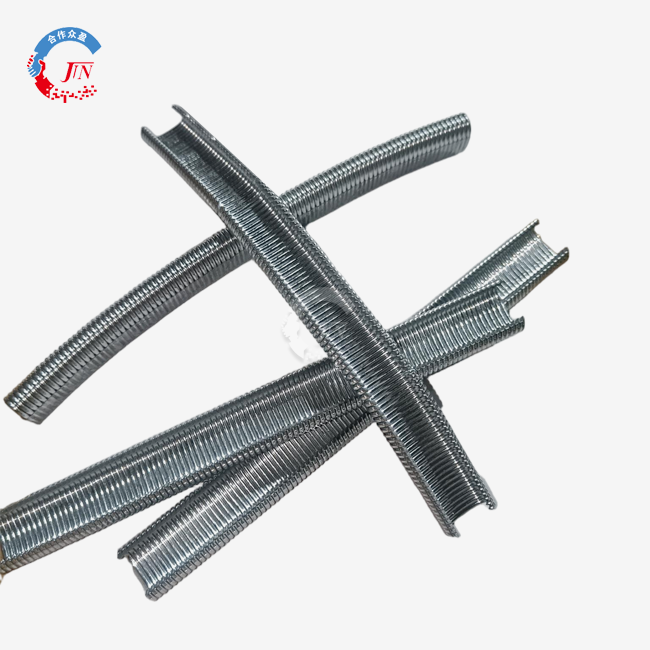
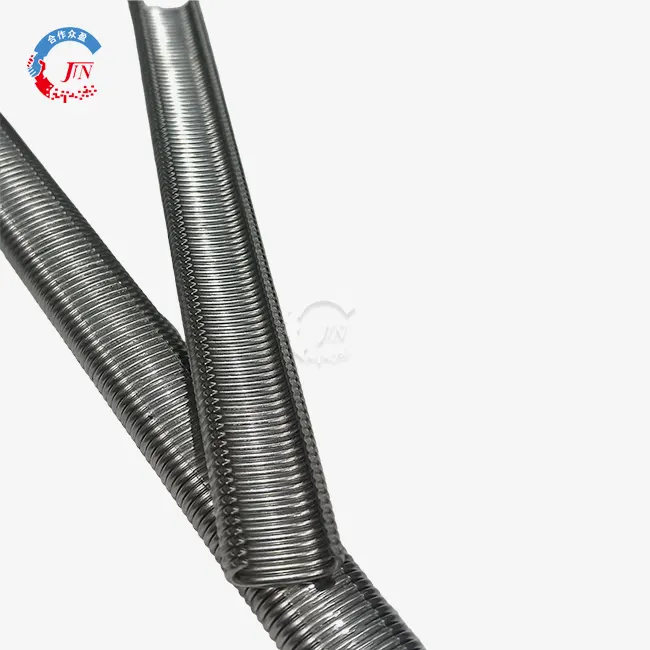
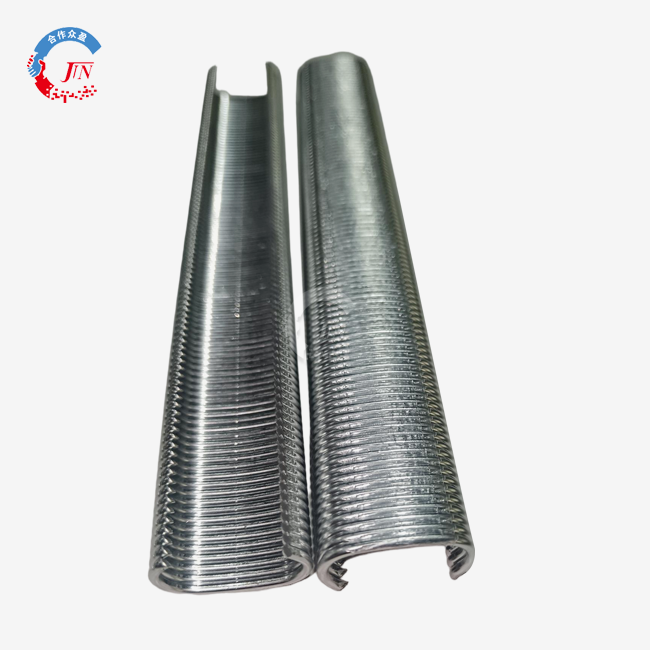
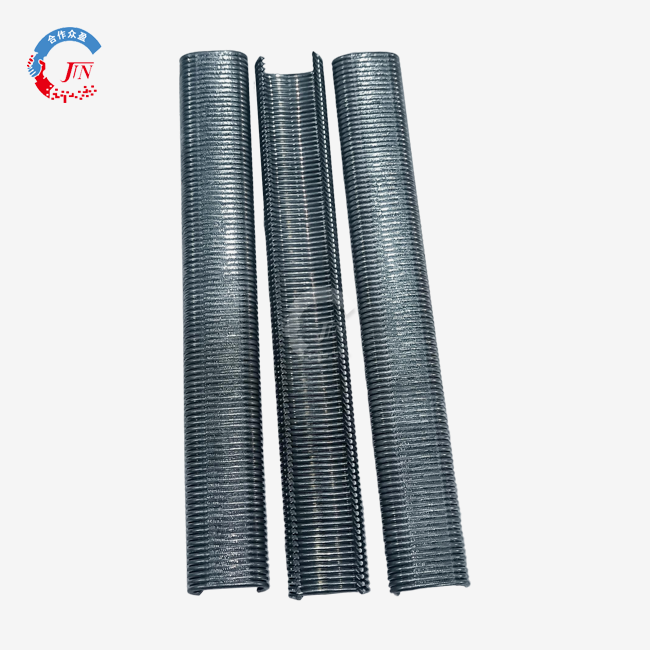
Upholstery hog rings are open C-shaped wire fasteners engineered to create permanent, high-tensile connections between fabric, foam, springs, and frames. In mattress, sofa, and cage assembly, they function as the primary tension link that keeps materials secured under cyclic loading and mechanical stress. Unlike staples or plastic clips, these metal fasteners deliver consistent holding strength across diverse industrial applications—from spring mattress production and automotive seat upholstery to poultry cage construction. Choosing the correct ring specification directly affects production throughput, product lifespan, and total fastening cost.

Understanding Upholstery Hog Rings: Types, Sizes, and Benefits
Procurement teams need to know exactly what each fastener choice does before they choose one for a production line. C-ring staples, which are sometimes called "hog rings," are one of the most trusted ways to attach things in furniture and industrial manufacturing, and for good reason.
Material Options and Their Differences
Most industry needs can be met by three main Products. Galvanized steel has a good mix between cost and performance, and it doesn't rust enough to be used indoors in places like furniture companies and mattress plants. Alloy-grade wire is better at keeping rows stable and resisting corrosion in environments that aren't too harsh. Stainless steel, especially Grade 304, is best for outdoor cages, marine seating, and production areas with a lot of moisture because rusting would lower the quality of the goods.

Size and Gauge Reference Guide
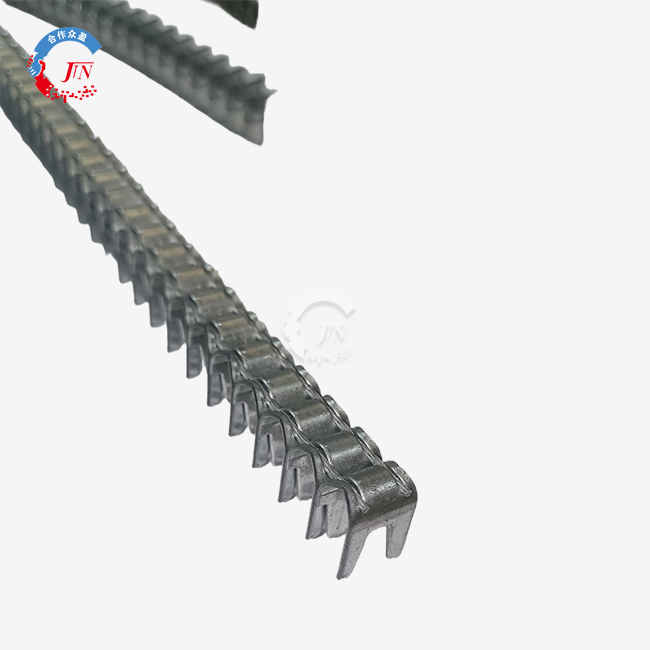
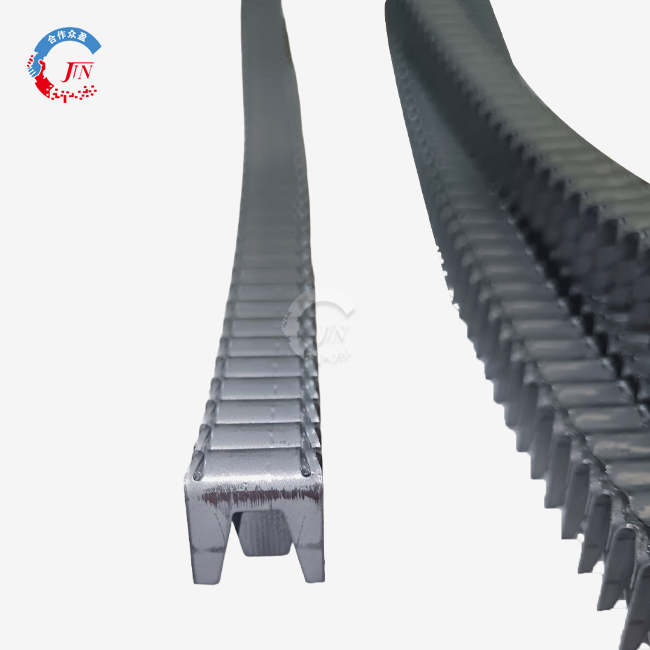
The C17 version from TJJZ is 16.9 mm wide and 8.7 mm high, and it is made for normal upholstery and spring-attachment uses. There are 16G and 17G gages available in 1/2" and 3/4" sizes to fit different thicknesses of material and tool magazine sizes. When you match the gage to the job, you can avoid two common production problems: rings that warp under load and closures that don't work right, which lets the fabric separate over time.
Key Performance Benefits
The open C-ring form makes it easy to use quickly in both manual and pneumatic processes, which cuts down on the time needed to work on busy production lines. These are the main performance benefits that are worth mentioning:
- Sharp-point penetration: Precision-tapered tips pierce leather, thick foam, and woven fabric cleanly, reducing crimping resistance and installation cycle time.
- Dimensional consistency: Strict manufacturing tolerances ensure each ring closes into a uniform shape, maintaining predictable pull-out resistance across thousands of fastening cycles.
- Anti-corrosion surface treatment: Galvanization and stainless steel finishing extend service life in demanding environments, reducing replacement frequency and long-term consumable costs.
When procurement managers buy from sellers who aren't reliable, they have to deal with production delays and poor quality. These performance traits directly address these problems.
How to Use Upholstery Hog Rings Effectively for Mattress, Sofa, and Cage Assembly?
To get the most out of any fastener, it's important to use the right fitting method for the job. Most problems with jamming and misfiring when using upholstery hog rings on production lines can be avoided by using the right tool and technique.
Tool Selection and Setup
If you make a lot of mattresses or furniture, you should use pneumatic hog ring pliers because they give you steady pinching force throughout full production shifts. Manual hog ring pliers, made by companies like Stanley, Bostitch, Arrow, Maxpower, and Midwest, are good for smaller jobs, repairs, and putting together cages where mobility is important. The C17 rings from TJJZ can be used with standard plier magazine widths in all of these tool groups.
Application by Industry
For putting together a spring mattress, rings link the pocket spring border wire to the cloth covering. This keeps the springs in place even when they are compressed over and over again. In sofa upholstery, rings hold the cover fabric and padding in place on the inner spring system. This stops the fabric from creeping, which shortens the life of the product. Rings connect mesh sections at points where tie wire would come loose over time when building wire cages for chicken coops, pet crates, or panels for animals.
Avoiding Common Installation Errors
Most pneumatic tool jams are caused by the feed angle and the position of the ring. Misfeeds that stop production can be avoided by loading rings so that the crown faces the direction of the feed and making sure that the tool space fits the width of the ring. If you need to move something, don't use pliers to do it. Instead, use a removal tool. This will keep you from tearing fabric or deforming wire mesh.
Comparing Upholstery Hog Rings with Alternative Fastening Solutions
Teams in charge of buying things often compare hog rings to staples, clips, and zip ties. There are times when both solutions are good, but the performance gap is clear when mechanical load is applied over time.
Holding Strength and Durability
While staples are quick and easy to use for attaching things to a surface, they don't have the same grip around wires or fabric that a closed C-ring does. Plastic zip ties are useful for temporarily putting together cages, but they break down when exposed to UV light and changes in temperature. When properly crimped, metal hog rings have a tensile resistance of more than 450 MPa, which is the standard for zinc-coated wire products in ASTM A641. This makes them the better choice for long-term use.
Cost Comparison Including Tooling
When it comes to gages, the cost per unit of hog rings is about the same as that of staples. Total cost-per-joint, on the other hand, also includes repairs to tools and downtime because of misfeeds. TJJZ's rings have a protective oil film layer that keeps them from rusting while they are being stored or shipped. This also helps the tools feed more smoothly and avoid getting stuck, which is a measurable benefit for production managers who are keeping an eye on how efficiently the line is running.
Stainless Steel vs. Galvanized for Specific Environments
, galvanized rings can be used on indoor furniture and mattresses that don't get wet often. Stainless steel rings are the right choice for outdoor cage structures, farm equipment, and boat seat padding. Using galvanized rings in places with a lot of salt or moisture speeds up corrosion. This leads to rust leaking through fabric and structural joint failure, which leads to warranty claims and customer returns.
Procurement Guide: Where and How to Buy Upholstery Hog Rings in Bulk?
It is just as important to find the right supplier of upholstery hog rings as it is to specify the right product. For buyers who buy a lot, supply stability and logistics dependability are just as important as unit price.
Evaluating Wholesale Suppliers
When looking for a hog ring provider, some of the most important things to look for are consistent sizes across production batches, available material certifications, enough inventory to handle repeat orders without long wait times, and the ability to make unique specs from samples that are given. Since February 2015, TJJZ has been open nonstop, supplying medium- to large manufacturers in the mattress, furniture, automotive, and cage equipment industries.
Bulk Purchasing Formats and Minimum Orders
TJJZ ships full pallets from a warehouse near Tianjin Port. Typical production wait times are three to five days. The price of bulk orders goes up as the number of orders goes up, and the company does both OEM and ODM production for customers who need custom wire gage, coating type, ring dimensions, or packaging format. Sample-based manufacturing is an option for buyers who want to make sure the fit and performance are good before committing to full production runs.
Logistics and Delivery Reliability
Being close to Tianjin Port cuts down on inland freight costs and travel times compared to providers who are farther inland. When shipped by ocean freight, full-pallet transport forms lower the risk of damage to goods. TJJZ's 3-minute reaction time to inquiries and set inventory levels make supply interruptions due to fastener shortages a manageable problem instead of a regular issue for procurement managers who are in charge of tight production plans.
Ensuring Long-Term Performance and Cost Efficiency
Environmental factors and installation practices together determine how long any fastening system holds in service.
Environmental Variables That Affect Ring Integrity
Humidity above 60% accelerates oxidation on uncoated or low-grade galvanized rings. Temperature cycling in automotive seat applications causes repeated expansion and contraction at the crimped joint. Specifying the correct material grade at the procurement stage—rather than upgrading after field failures—is the more cost-effective approach. TJJZ's stainless steel and alloy options address both high-humidity and high-vibration environments.
Process Improvements That Reduce Rework
Training assembly teams on correct ring orientation, crimping depth, and tool maintenance reduces misfire rates and material waste. Scheduling periodic tool calibration for pneumatic pliers maintains consistent closing force, which directly affects joint strength. These practices lower total production cost without requiring any change in fastener specification.
Trends in Fastener Technology
Alloy wire formulations with enhanced zinc-aluminum coatings are gaining ground in agricultural and outdoor applications because they outperform standard hot-dip galvanization in salt-spray testing. Procurement engineers evaluating long-term supply agreements should request updated material data sheets when renewing contracts to confirm that product formulations continue to meet specification requirements.
Conclusion
The material grade, gage, coating, and measurements of a C-ring fastener all have a direct and measured effect on how well it is made, how long it lasts, and how much it costs to hold everything together. If you are putting together mattress springs, upholstery hog rings for sofas, building car seats, or making wire cages, you should choose between galvanized, alloy, and stainless steel hog rings based on how they will be used, not just the price per unit. The C17 standard from TJJZ, along with stable production tolerances and a protective oil film covering, makes it a good place to start for most industrial fastening needs.
FAQ
Are hog rings compatible with all types of upholstery fabric?
Yes. The sharp-point design on TJJZ's C17 rings penetrates woven fabric, leather, vinyl, and thick foam without tearing. For delicate materials, slightly reducing pneumatic tool pressure during crimping prevents surface damage while maintaining joint strength.
How long do galvanized rings last compared to stainless steel in outdoor environments?
In controlled indoor environments, galvanized rings typically perform reliably for the product's full service life. In outdoor or high-humidity settings—such as agricultural cages or marine upholstery—stainless steel rings are significantly more durable. Salt-spray test data under ASTM A641 shows that hot-dip galvanized coatings degrade noticeably faster than Grade 304 stainless steel when exposed to moisture exceeding 80% relative humidity.
What safety protocols apply during installation?
Operators using pneumatic pliers should wear safety glasses at all times, as crimped wire fragments can dislodge at high speed. Tool pressure should be set according to the manufacturer's specification for the ring gauge being used. Always clear the tool magazine before adjusting ring feed to prevent accidental discharge.
Can I request custom ring dimensions or coatings?
TJJZ supports sample-based manufacturing and custom specifications covering wire gauge, ring dimensions, coating type, and packaging format. Contact the team directly at userID@jinzhuangfastener.com to initiate a customization request.
Partner with TJJZ for Dependable Upholstery Hog Rings Supply
Industrial fasteners from TJJZ have been sold to companies that make mattresses, furniture, car seats, and cage equipment since 2015. We are a reliable company that makes upholstered hog rings. Our C17 rings are made of zinc, alloy, and stainless steel, and we can ship them fully palletized from Tianjin Port. We also offer OEM customization. To get a price right away, email your requirements to userID@jinzhuangfastener.com or go to jinzhuangfastener.com.
References
1. Furniture Today — Industry Fastener Application Reports, 2022.
2. ASTM International — Standard Specification for Zinc-Coated (Galvanized) Carbon Steel Wire, ASTM A641/A641M, 2023.
3. Journal of Manufacturing Processes — Wire Fastener Performance Under Cyclic Loading in Upholstered Furniture Applications, 2021.
4. Automotive Engineering International — Seat Assembly Fastening Systems and Material Durability Standards, 2020.
5. Poultry Science Journal — Structural Integrity Requirements for Metal Cage Assembly in Commercial Poultry Housing, 2019.
6. International Journal of Advanced Manufacturing Technology — Corrosion Resistance Testing of Zinc-Aluminum Alloy Coatings on Wire Products, 2022.
Learn about our latest products and discounts through SMS or email