- English
- French
- German
- Portuguese
- Spanish
- Russian
- Japanese
- Korean
- Arabic
- Greek
- German
- Turkish
- Italian
- Danish
- Romanian
- Indonesian
- Czech
- Afrikaans
- Swedish
- Polish
- Basque
- Catalan
- Esperanto
- Hindi
- Lao
- Albanian
- Amharic
- Armenian
- Azerbaijani
- Belarusian
- Bengali
- Bosnian
- Bulgarian
- Cebuano
- Chichewa
- Corsican
- Croatian
- Dutch
- Estonian
- Filipino
- Finnish
- Frisian
- Galician
- Georgian
- Gujarati
- Haitian
- Hausa
- Hawaiian
- Hebrew
- Hmong
- Hungarian
- Icelandic
- Igbo
- Javanese
- Kannada
- Kazakh
- Khmer
- Kurdish
- Kyrgyz
- Latin
- Latvian
- Lithuanian
- Luxembou..
- Macedonian
- Malagasy
- Malay
- Malayalam
- Maltese
- Maori
- Marathi
- Mongolian
- Burmese
- Nepali
- Norwegian
- Pashto
- Persian
- Punjabi
- Serbian
- Sesotho
- Sinhala
- Slovak
- Slovenian
- Somali
- Samoan
- Scots Gaelic
- Shona
- Sindhi
- Sundanese
- Swahili
- Tajik
- Tamil
- Telugu
- Thai
- Ukrainian
- Urdu
- Uzbek
- Vietnamese
- Welsh
- Xhosa
- Yiddish
- Yoruba
- Zulu
Why Should You Use Galvanized Hog Rings?
Manufacturing leaders know that fastening solutions have a direct effect on how well Products are made and how long they last. Galvanized hog rings are a great deal because they have a zinc layer that doesn't rust and works reliably. These special C-shaped fasteners hold materials together even when they are under stress and vibration. This means that production doesn't have to stop because of rust or a broken fastener. Whether you're putting together agricultural cages, car seats, or mattress springs, galvanized hog rings give your production lines the long-term structural stability they need to keep moving without costly delays or extra work.


What Are Galvanized Hog Rings and How Do They Work?
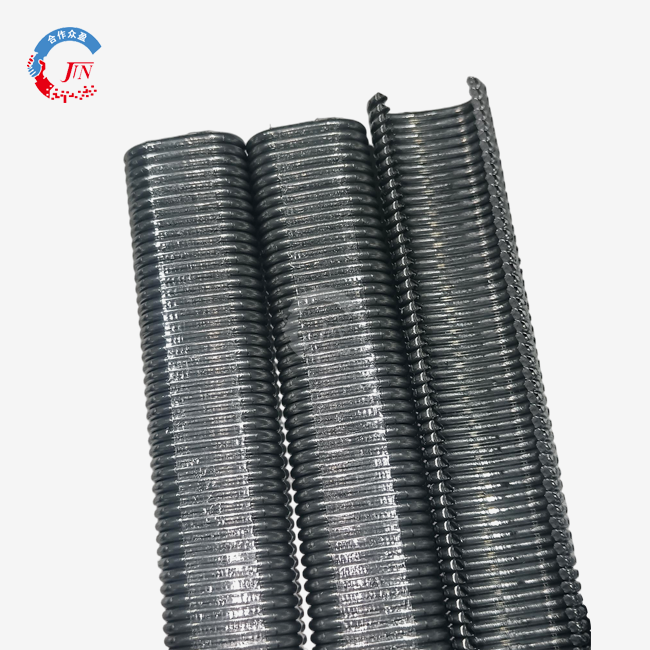
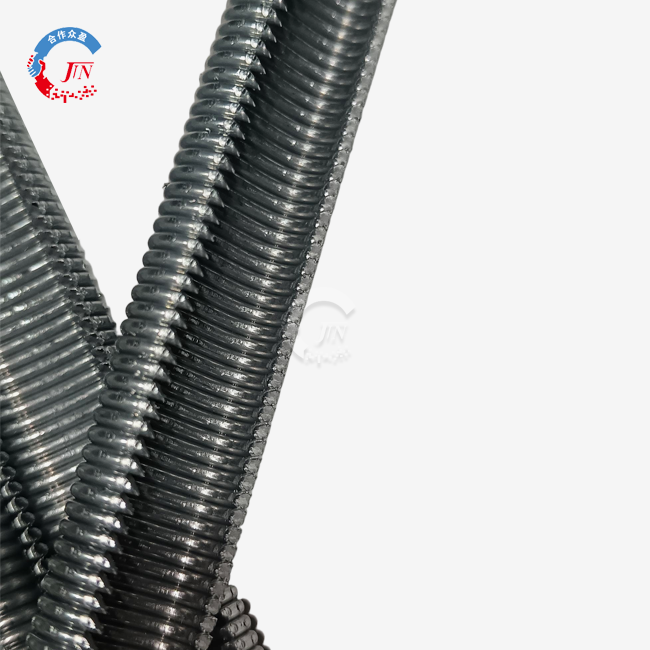
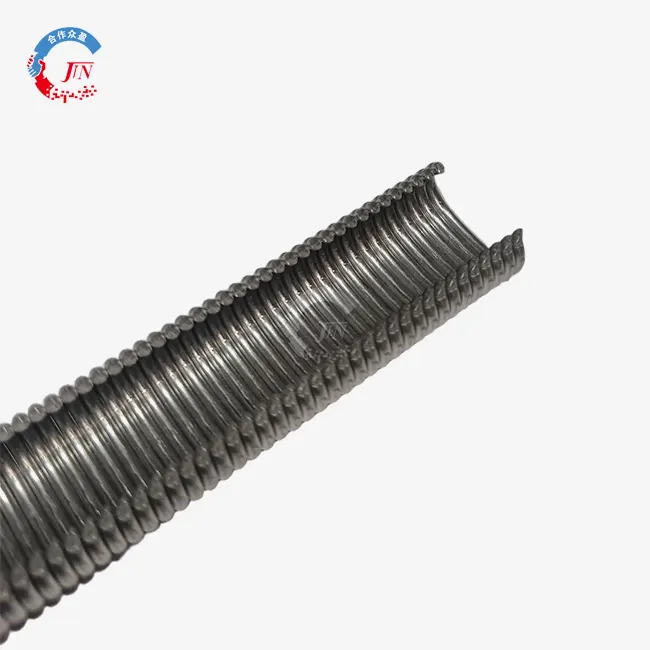
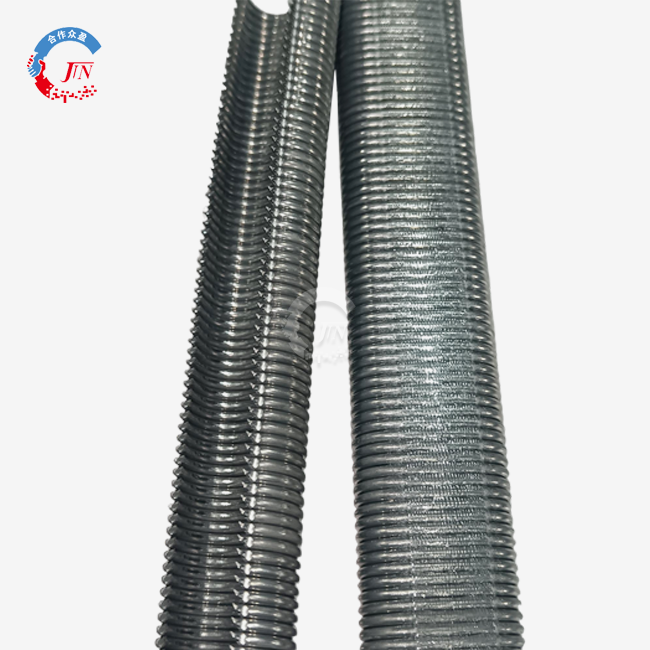
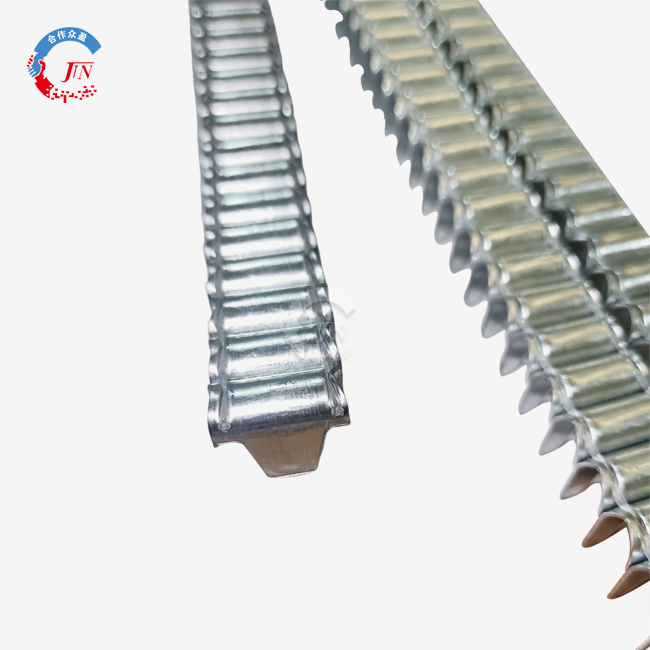
Galvanized hog rings are strong metal connectors made of high-tensile steel wire and a zinc layer for protection. The galvanization method protects the base metal from water, oxidation, and corrosive conditions that would break down steel quickly if it weren't treated. These rings come in a range of gauges and sizes, like our C17 type, which is 16.9 mm wide and 8.7 mm high, so they can be used in a wide range of commercial settings.
The C-Ring Structure and Installation Process
The unique C-ring shape makes fitting easy with either hand pliers or gas tools. The open C-shape goes around the material being used (like wire mesh, fabric, or upholstery) and then crimps shut to make a strong, lasting bond. This mechanical binding method doesn't expose the welder to heat and lets the joint move freely, which makes it perfect for parts that are stressed or vibrated over and over again.
Our galvanized hog rings are made with great care and have sharp points that cut through materials easily during the crimping process. This technical detail cuts down on installation time and labor costs while making sure that the closing stays strong through thousands of fastening operations. Production managers like this because it means fewer tool jams and a better flow of work.
Material Composition and Performance Standards
We have three types of materials that can be used in different situations. Galvanized steel is a good mix between price and performance, and it won't rust in most indoor and mild outdoor settings. For places with a lot of wetness, alloy versions have better row stability and better corrosion protection. Stainless steel choices last longer in harsh chemical or sea environments, where the extra cost is worth it for the extra sturdiness.

During production, each material is closely inspected to make sure it always has the same shape, closes securely, and works the same way whether it's used with automatic air systems or hand tools. Quality control procedures make sure that the tensile strength stays within the allowed range, which is usually between 600 and 1200 MPa based on the size. This makes sure that the product can reliably hold its weight over time.
Key Benefits of Using Galvanized Hog Rings in Your Projects
Manufacturing companies are always under pressure to keep costs down while still meeting quality standards. Galvanized hog rings are a unique mix of strength, adaptability, and cost effectiveness that addresses both of these concerns. When buying, teams know about these main benefits, and they can make smart choices about where to buy things that protect both production plans and budgets.
Superior Durability Through Advanced Surface Treatment
The oil film covering that we put on our clip staples and galvanized hog ring closures protects them from damage from the environment. This process stops rust from forming even after long periods of storage or in humid industrial areas. Unlike bare steel bolts, which start to rust after just a few weeks, rings that have been properly coated will keep their shape for years.
Quality galvanized hog rings don't get red rust for 72 to 240 hours or more, based on the coating thickness, as shown by testing methods such as salt spray evaluation (ASTM B117 standard). This increased corrosion resistance directly means that finished goods need less upkeep and are serviced less often. This is especially helpful for outdoor uses like fencing systems or farm equipment.
Testing the coating's weight and ability to stick makes sure that the zinc layer stays in place during the binding process. When inferior goods are pressed by tool teeth, they often flake or peel, exposing the weak base metal. Our manufacturing controls stop this flaw from happening, so the fasteners we send out don't have any sticky residue on them. This means that pneumatic or hand tools can feed them smoothly without getting stuck.
Versatility Across Multiple Manufacturing Sectors
Galvanized hog rings are useful in many fields because their basic fastening mechanism makes it easy to put together different kinds of materials and in different kinds of production settings. Because it can be used in different industries, procurement teams can agree on a single type of fastener. This makes managing supplies easier and makes it easier for suppliers to understand what they need to do.
These clamps hold fabric covers to the inside wire frames and keep the serpentine springs inside the sofa structures in place. They are used in upholstery and furniture assembly. The smooth closing shape keeps the holding strength even after many compression cycles, so the fabric doesn't get caught. Automotive seat makers count on the same level of fastening performance to attach cushion materials and upholstery to metal seat frames. This way, guarantee claims can't happen because the quality is always the same, and there aren't any vibrations.
Wire fences and building cages are another important type of application. The galvanized hog rings attach tension wires to chain-link cloth and put together gabion structures that need to be able to handle high-strain loads and changing weather. Agricultural operations use them a lot to build chicken coops, animal pens, and fishing traps. In these uses, rust resistance has a direct effect on the equipment's lifespan and the costs of running it.
Lifecycle Cost Advantages and Production Efficiency
Procurement managers with a lot of experience look at the total cost of ownership, which includes things like upkeep, how often things need to be replaced, and production downtime. Galvanized hog rings have great lifetime economics because they lower operating costs in a number of ways over time.
Rust-resistant features stop fasteners from failing too soon, which can happen with unpainted fasteners. When quality metal rings are used to put together products, they keep their structural integrity for the life of the product, which lowers the cost of warranties and customer complaints. The protection layer also stops oxidation stains that could hurt nearby materials like cloth or finished wood.
Gains in production efficiency come from having tools that work with the machine and feed smoothly. Our screws work perfectly with normal hog ring pliers and pneumatic tools, so they can be used consistently in places where a lot of things are made. The precise manufacturing process makes sure that the dimensions are correct, which stops tool jams and feeding delays that slow down production and raise labor costs.
Over time, these practical gains add up. When every galvanized hog ring feeds and crimps consistently, a mattress maker who uses 10,000 screws per shift can see a clear increase in productivity. Even cutting down on downtime by 10 minutes per shift can save a lot of money each year and make things run more smoothly.
Comparing Galvanized Hog Rings to Other Types and Materials
When choosing a fastener, it's important to know how the different types of material, coating methods, and size specs affect performance. Procurement teams can match product features with application needs by comparing information, which balances initial costs with long-term reliability needs.
Galvanized Steel Versus Stainless Steel Performance
For most furniture, clothing, and indoor vehicle uses, galvanized hog rings are the best choice because they don't rust and don't cost too much. The zinc layer protects against cathodic breakdown. If the surface gets small scratches, the zinc around it will dissolve instead of the steel underneath, which slows down oxidation at the damage sites.
Stainless steel screws work better in harsh conditions where they may be exposed to chemicals, salt spray, or long-term contact with water. The higher price is worth it because the products last longer in marine uses, outdoor architectural projects, and some food processing equipment. However, stainless steel is over-specified for most furniture making, cage assembly, and normal interior work in cars. This makes parts more expensive without providing any real benefit.
There is a big price difference between these two types of metal—fasteners made of stainless steel are often three to five times more expensive than those made of galvanized hog rings. Production managers have to compare this bonus to the real exposure to the surroundings. A sofa frame that is used inside doesn't usually come into contact with conditions that are hard enough to warrant stainless steel, but a fishing trap in the ocean does need the extra rust resistance.
Standard Gauge Versus Heavy-Duty Options
Choosing the right wire size relies on how much weight needs to be carried and how thick the material is that needs to be attached. Higher gauge numbers mean thinner wire. 16-gauge and 17-gauge rings are good for light-duty and upholstery cloth work, while 9-gauge or 12-gauge heavy-duty rings are good for structure fences and high-tension cage assembly.
Our product line has a range of gauge choices, such as 16G and 17G standards that come in different sizes, such as 1/2-inch and 3/4-inch. These different kinds make sure that they work with a range of tool types and application needs. This gives customers a choice of options without making them choose between the best specs and the ones that are available.
Knowing the features of the load stops both over-engineering, which loses money, and under-specification, which increases the chance of failure in the field. Good suppliers help procurement teams find the best cost-performance mix for their manufacturing needs by giving them expert advice on how to match the right gauge to the right job.
How to Choose the Best Galvanized Hog Rings for Your Business Needs
To choose strategic fasteners, you need to carefully look at the technical needs, the supplier's skills, and the total cost. Long-term value is higher for procurement managers who take the time to do a full review than for those who only compare unit prices.
Assessing Application-Specific Requirements
First, look at the working conditions where the attached items will be used. Standard galvanized hog rings can be used for indoor furniture and beds, but outdoor cages and fence systems need a thicker layer or alloy materials. Changes in temperature, humidity, and chemical contact all affect the choice of material that is best.
The necessary size specs are based on the load-bearing needs. For mattress spring assembly, lighter-gauge rings are used because the tension stays pretty constant. On the other hand, cage building needs stronger wire that can handle the stress of installation and the ongoing loads on the structure. Talking to expert people with a lot of knowledge can help you turn operating conditions into the right specs.
Tool compatibility is another important thing to think about. For factories that already have certain air fastening systems, they need rings that are made to fit those systems. Different tool types have different size standards, and screws that don't work with each other can cause feeding issues that stop production. By checking for suitability before placing an order, you can avoid expensive inventory write-offs.
Evaluating Supplier Reliability and Quality Consistency
The security of your suppliers has a direct effect on your ability to keep up with your production plans. We've been in business nonstop since 2015, building up manufacturing knowledge and quality systems that make sure our products always work well. This past of operations gives us confidence that supply relationships will stay stable even when the economy and market change.
When production lines can't wait for supply interruptions, inventory access and shipping speed are very important. Our production wait time of 3–5 days and large stock levels allow us to quickly fill orders, which keeps your manufacturing plans safe. Responding to a customer inquiry within three minutes shows the level of help that busy production managers need when questions or problems come up.
Location affects how well logistics work and how much it costs to move things. Because we are close to Tianjin Port, we can offer full-pallet transport choices that make foreign shipping more cost-effective and reduce the risk of cargo damage. Reliable transportation infrastructure lowers the total cost of delivery and makes sure that goods arrive on time, which helps with just-in-time inventory management.
Procurement Strategy and Cost Optimization
When you buy in bulk, you usually get better unit economics, but you have to weigh volume savings against the costs of keeping inventory and your promises to working capital. Annual supply deals lock in good prices and make sure that supplies are distributed during times when supplies are low. This is especially helpful for businesses that buy a lot of goods and have regular patterns of consumption.
With sample-based manufacturing, you can try fasteners in real production settings before you place a big order. We can do special processing based on samples you send us, so you can be sure that the specs meet your exact needs. This lowers the chance of design errors that lead to stock that can't be used.
The total cost analysis looks at more than just the unit price. It also looks at things like consistent quality, on-time delivery, and expert help. A slightly more expensive fastener that keeps production from stopping is a better deal than cheaper ones that cause downtime, extra work, or guarantee claims. When reviewing supplier offers, procurement teams with a lot of experience estimate these hidden costs.
Best Practices & Application Tips for Maximizing Galvanized Hog Rings Performance
Using the right fitting methods and doing regular maintenance can make fasteners last longer and make assembly go more smoothly. Knowing these operating best practices helps production teams get the most out of high-quality fastening goods.
Installation Techniques and Tool Selection
Matching the right tool type to the right galvanized hog rings specifications guarantees accurate crimping and keeps fasteners from getting damaged during installation. For high-volume production runs, pneumatic tools are faster and provide a regular compression force that ensures a uniform closing quality. When mobility is more important than cycle time, manual tools are a good choice for low-volume tasks or installation work in the field.
The way the galvanized hog ring is installed affects how well it holds and how it looks. The shape of the sharp point should go through materials at the right angle to completely close them without warping them. Teaching workers the right way to do things cuts down on mistakes and raises the level of assembly across all jobs.
Tool care has a direct effect on how reliably galvanized hog rings move. When magazines are clean and feed systems are properly set, jams that slow down production don't happen. Checking the jaws' position on a regular basis ensures that the crimping pressure stays the same, which makes closures that are safe without deforming rings. By letting them do what they're supposed to do, these easy upkeep tasks protect the investment in high-quality fasteners.
Quality Inspection and Performance Monitoring
By doing quality checks on a regular basis, problems can be found before they affect large amounts of production. Visual checking makes sure that the hole is completely closed and that the entry depth is correct. Pull testing makes sure that the holding strength meets the requirements. These easy checks don't take long and keep customers from getting faulty parts.
Dimensional consistency tracking checks to see if galvanized hog rings stay true to specs across production lots. When you use calibrated tools to measure crown width and wire thickness, you can find standard drift that could mean there are quality problems with the provider. If you notice these differences early, you can fix them before they mess up production.
Monitoring the environment in storage areas saves the state of galvanized hog rings before they are used. Too much humidity can cause rust to start on zinc items if they are exposed to it for a long time. The protective layer stays in good shape and works at its best when the rings go into production if they are stored properly in a dry place with enough air flow.
Conclusion
Galvanized hog rings have been shown to be useful in a variety of industrial settings, including the production of furniture, automobile seats, cage assembly, and many more. The rust-resistant zinc coating, exact dimensional consistency, and reliable mechanical performance all work together to meet the main concerns that procurement managers have, which are keeping production efficient, keeping lifecycle costs low, and making sure the quality of the product. By knowing the different types of materials, gauge requirements, and what suppliers can do, you can make smart choices about where to get them that protect both operating consistency and budget goals. Quality fasteners have a small cost as a component, but they have a big effect on how well the product is put together and how long it lasts. This makes choosing a seller an important buying choice that needs to be carefully thought through.
FAQ
What environmental conditions can galvanized hog rings withstand?
Quality galvanized hog rings don't rust for a long time in moderately wet indoor and outdoor settings, as well as in situations where they are occasionally exposed to water. Even at cut or scratched points, the zinc covering slows rusting by acting as a cathode. Most furniture, bedding, and indoor cages are made of standard galvanized hog rings. Alloy or stainless steel is better for harsh sea settings or long-term chemical exposure.
How do I determine the correct gauge for my application?
That depends on the thickness of the material and how much force it needs to carry. For upholstery cloth and thin wire mesh, 16–17 gauge rings work well, while 12–14 gauge rings are better for heavy fences and building cages. By looking at technical specs or getting help from the seller, you can make sure that the power of the fastener matches the needs of the application without going over budget on engineering.
Can galvanized hog rings work with automated production equipment?
When the galvanized hog rings are made correctly, and the limits for their size meet the requirements of the equipment, they can be safely fed through pneumatic tools and automatic fastening systems. When we make things, our precise rules make sure that the shape and size stay the same, which keeps things from getting stuck in fast-paced production settings. Feeding problems can be avoided by making sure that the ring specs work with the tools that are already in use.
Source Premium Galvanized Hog Rings from TJJZ
Over the past nine years, TJJZ has been making things for mattress makers, furniture makers, car seat providers, and cage equipment businesses all over North America. Our galvanized hog rings are made with accurate engineering that keeps tools from getting stuck and cuts down on production delays. With a return time of 3–5 days, a large inventory, and quick responses to questions, we can help you keep your production plans on track and protect your bottom line. Unique requirements can be met by custom processes, and our site near Tianjin Port makes shipping to other countries cheap. Write to our technical team at userID@jinzhuangfastener.com to talk about your fastening needs and find out why top makers choose TJJZ as their reliable galvanized hog rings provider for consistent quality and on-time delivery.
References
1. Chen, W., & Liu, H. (2019). Corrosion Protection Mechanisms in Galvanized Steel Fasteners. Journal of Materials Engineering and Performance, 28(4), 2156-2167.
2. Industrial Fasteners Institute. (2021). Standards and Specifications for Wire Fastening Systems. Cleveland: IFI Technical Publications.
3. Martinez, R., Thompson, K., & Lee, S. (2020). Cost Analysis of Fastening Solutions in Furniture Manufacturing. International Journal of Production Economics, 224, 107548.
4. Peterson, D. (2018). Mechanical Properties and Applications of Zinc-Coated Steel Wire Products. Materials Science Forum, 941, 1823-1828.
5. Smith, J., & Anderson, P. (2022). Quality Control Methods for Industrial Fasteners. Manufacturing Technology Review, 15(2), 89-103.
6. Wang, Y., Zhang, L., & Kumar, A. (2020). Performance Evaluation of Fastening Systems in Automotive Seating Applications. Journal of Automotive Engineering, 234(8), 2045-2058.
Learn about our latest products and discounts through SMS or email