- English
- French
- German
- Portuguese
- Spanish
- Russian
- Japanese
- Korean
- Arabic
- Greek
- German
- Turkish
- Italian
- Danish
- Romanian
- Indonesian
- Czech
- Afrikaans
- Swedish
- Polish
- Basque
- Catalan
- Esperanto
- Hindi
- Lao
- Albanian
- Amharic
- Armenian
- Azerbaijani
- Belarusian
- Bengali
- Bosnian
- Bulgarian
- Cebuano
- Chichewa
- Corsican
- Croatian
- Dutch
- Estonian
- Filipino
- Finnish
- Frisian
- Galician
- Georgian
- Gujarati
- Haitian
- Hausa
- Hawaiian
- Hebrew
- Hmong
- Hungarian
- Icelandic
- Igbo
- Javanese
- Kannada
- Kazakh
- Khmer
- Kurdish
- Kyrgyz
- Latin
- Latvian
- Lithuanian
- Luxembou..
- Macedonian
- Malagasy
- Malay
- Malayalam
- Maltese
- Maori
- Marathi
- Mongolian
- Burmese
- Nepali
- Norwegian
- Pashto
- Persian
- Punjabi
- Serbian
- Sesotho
- Sinhala
- Slovak
- Slovenian
- Somali
- Samoan
- Scots Gaelic
- Shona
- Sindhi
- Sundanese
- Swahili
- Tajik
- Tamil
- Telugu
- Thai
- Ukrainian
- Urdu
- Uzbek
- Vietnamese
- Welsh
- Xhosa
- Yiddish
- Yoruba
- Zulu
1 Inch Hog Rings for Livestock Enclosures and Fence Manufacturing
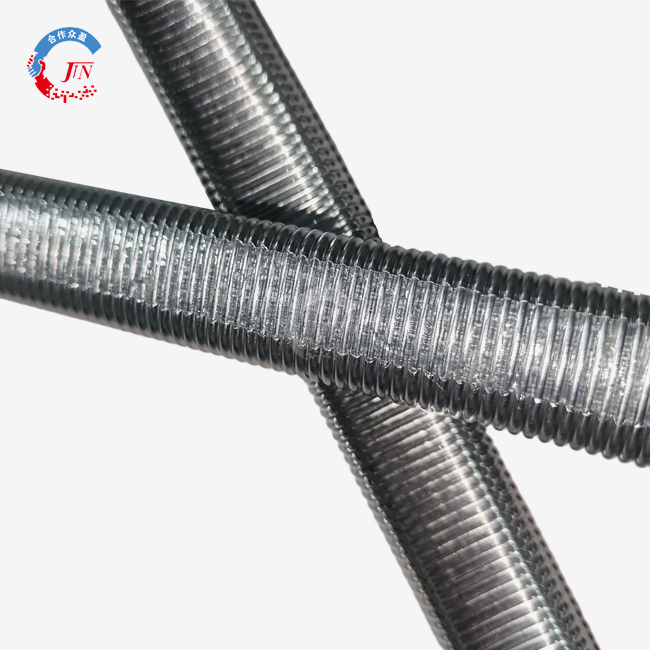
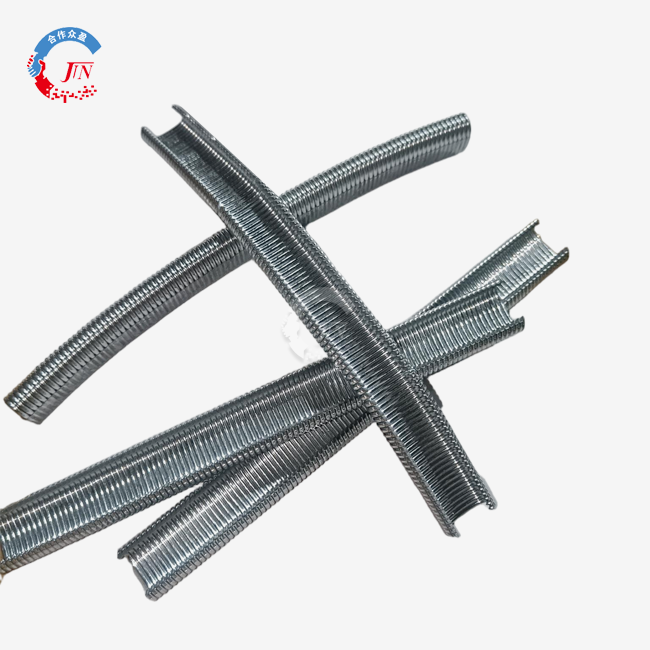
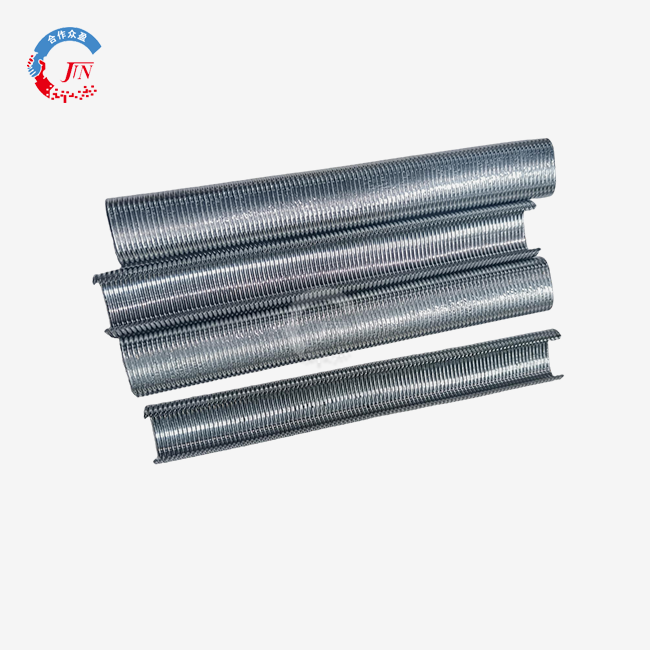
When you manage procurement for a livestock operation or fence manufacturing facility, the fasteners you choose directly affect structural integrity and long-term maintenance costs. 1 inch hog rings are heavy-duty C-shaped wire fasteners with a 1-inch crown width before closure, precision-formed from high-tensile wire to join thick mesh strands, secure perimeter fencing, and assemble animal enclosures. Their wider span bridges multi-strand wire joints that smaller rings simply cannot grip, making them a preferred choice across agricultural fencing, cage production, and industrial wire mesh applications.


Understanding 1 Inch Hog Rings: Types, Sizes, and Applications
Material Options and Their Environments
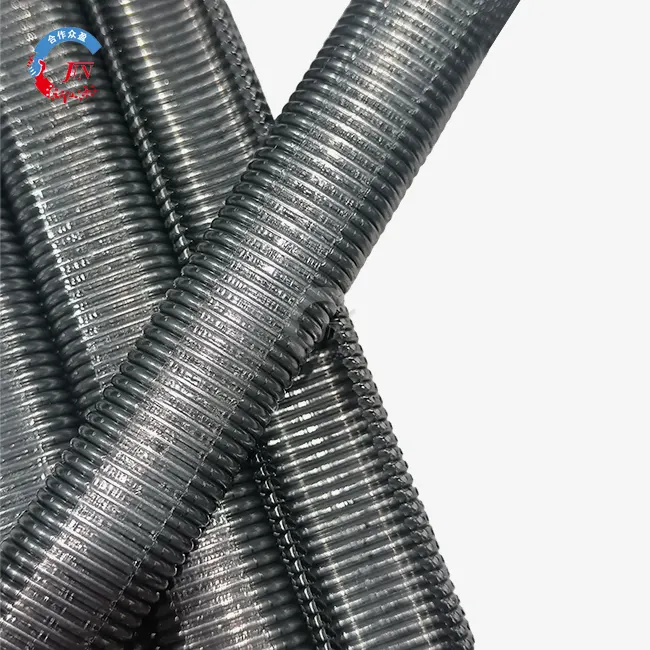
In the hog ring market, there are three main types of materials. Steel that has been hot-dip galvanised meets ASTM A641 standards and can be used for general fencing outside. Grade 304 or 316 stainless steel doesn't rust, so it's a good choice for farms that are close to water or chicken coops that get wet a lot. An extra layer of polymer covers the galvanised wire in this type of mesh. This keeps the wire from getting worn down and gives lighter-duty shelters some weather protection.
Why the 1-Inch Size Matters
The crown hole is 1 inch wide, so the ring can fit around several thick wires at once. Two high-tensile wires can be joined together inside a single loop in a 7-gauge high-tensile perimeter fence without changing its shape. Tinier rings, like the ¾-inch size, don't have enough room to connect thick wire joints securely. The clip will come loose if the load is put on for a long time.
1 Inch vs. 1.25 Inch: Selecting the Right Span
The 1.25-inch ring is mostly only used to make very thick and multi-layered gabion baskets or bases. When the 1-inch ring is closed, its final diameter is smaller—usually between ¼ and ½ of an inch. This keeps the joints from moving when animals push on them. This is useful for setting up normal cow panels and chain-link fences in fields. To cut down on waste and tool wear when making a lot of something, choose the right size.

How to Use 1 Inch Hog Rings in Livestock Enclosures and Fence Manufacturing
Step-by-Step Installation Process
First, line up the tension wire or frame rail with the mesh screen. The hog ring strip should be put into a pneumatic tool with a wide jaw that can handle crown rings that are 1 inch wide. 3/4-inch tools won't do the job. Make sure the ring crimps all the way closed by pressing the trigger. Then, put the tool's jaw around the wires that are touching. There should be rings every 4 to 6 inches along the line join so that the weight is spread out evenly.
Essential Tools and Safety Practices
If you set the wide-jaw hydraulic hog ring pliers to 90–100 PSI, they can securely hold 9-gauge or 11-gauge rings, including 1 inch hog rings, while you pinch them. It's important to always wear safety glasses and cut-resistant gloves when operating the tool. Check the tool magazine before every shift. Sometimes, production lines stop in the middle of a process because dust builds up on combining tape that is old or poorly maintained.
Common Challenges and a Real-World Example
Most of the time, ring legs that don't close all the way are a sign that the air pressure is too low for the wire size being used. 12% of the fasteners failed. To fix this, they switched to rings with a smooth, burr-free finish and increased the tool pressure to 95 PSI. The business is in the Midwest and makes chicken coops. In the first month, production downtime dropped by about 18%, and structural rejects dropped to less than 2%.
Choosing the Best 1 Inch Hog Rings for Industrial and Agricultural Use
Key Selection Criteria
The first three things that buying teams should check are the tensile strength, the adhesion of the coating, and the level of uniformity. The corrosion barrier is less strong at the joint, where there is most moisture, because a ring that flakes zinc when you crimp. QA managers can use conforming rings to ASTM A641 for zinc coats and ASTM A580 for stainless wire to cross-check the quality of the goods with the papers that go with the shipments.
Here are the most important things that buyers always look at first:
- Corrosion resistance: Hot-dip galvanized rings carry a thicker zinc layer than electro-galvanized options, extending service life in outdoor livestock environments by several years under typical weather exposure.
- Dimensional consistency: Uniform crown width and leg length are essential for smooth, jam-free feeding in automated or semi-automated ring installation tools on high-volume production lines.
- Surface finish quality: A burr-free, smooth profile prevents tearing of mesh coatings, reduces tool wear, and maintains a secure closure geometry without material distortion.
If the profile is smooth and free of burrs, mesh coats won't tear, tool wear will be lower, and the shape of the closure will stay in place without the material stretching.
Hog Rings vs. Alternative Fasteners
When used for open-field fences, zip ties wear out after two to three seasons of UV light. Animal screens need to be able to close all the way around with wire clips so that they don't come apart when animals press on them. Hog rings, on the other hand, make a strong mechanical lock around both wire strands, which spreads the stress around the whole closure. There isn't a good option that costs about the same per joint for farm fence wire-to-wire connections that hold weight.
Bulk and Custom Packaging Considerations
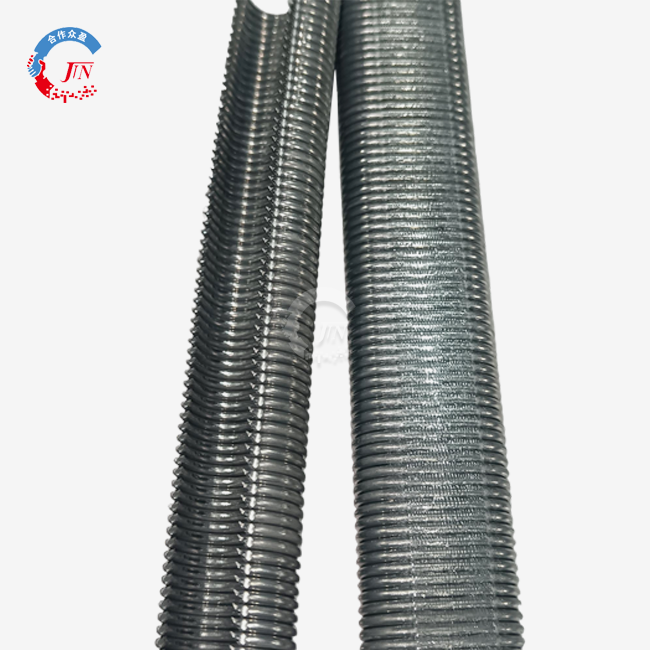
For people who purchase 1 inch hog rings in bulk and use automatic assembly lines, the adhesive needs to be uniform and leave no residue in the tool magazine. Each strip needs 40 to 50 rings. Packaging tailored to box weight, bag count, or pallet design makes inventory easier to track and reduces handling costs for facilities that process thousands of cage panels every week.
Procurement Guide: Where and How to Buy 1 Inch Hog Rings in Bulk
Evaluating Supplier Reliability
A dependable 1 inch hog rings supplier should hold verifiable ISO 9001 manufacturing certification and provide material test reports on request. Lead time transparency matters—production schedules in livestock equipment manufacturing rarely tolerate supply gaps. Suppliers with established inventory buffers and a track record of consistent output since at least 2015 carry lower supply-chain risk than newer entrants with limited production history.
Pricing Structure and Bulk Discounts
Unit pricing drops significantly at pallet-quantity orders, typically 500 kg to 1,000 kg per SKU. Request itemized quotes that separate material cost, surface treatment, collation, and freight so you can compare suppliers accurately. Proximity to a major export port also reduces freight lead time—a supplier located near Tianjin Port, for instance, can consolidate full-pallet loads with lower cargo damage rates compared to multi-leg inland routing.
Initiating an Inquiry Efficiently
Prepare a specification sheet for 1 inch hog rings listing wire gauge, crown width, closure diameter, coating type, strip count per box, and monthly volume before contacting any supplier. This allows the manufacturer to provide an accurate sample proposal quickly, avoiding multiple clarification emails. Sample-based production, in which the factory replicates your approved sample, helps prevent specification deviations across large orders.
Safety and Maintenance Tips for Long-Term Use of 1 Inch Hog Rings
Safe Handling During Installation
Keep broken rings in cases that can't be opened before you put them together. They won't rust because of this. Do not try to open or use a crimped ring again; the wire becomes hard after the first closure and could break at any time. The people who are installing should be taught to look at each closed ring. Any ring with a gap or legs that aren't even should be taken off and put on again right away.
Corrosion Prevention in Harsh Environments
In chicken coops with a lot of ammonia, zinc coats wear off faster than on fences that are out in the open. At the very least, hot-dip galvanized rings should be used, and fastener joints should be checked once a year in places with a lot of chemicals or water. If you use 316-grade stainless steel rings on livestock farms near the water or on farms that are close to the coast, chloride will wear them down over time.
Regulatory and Environmental Compliance
There are rules from the USDA and EPA about how US farms should use things and get rid of trash. As long as the fasteners you buy have zinc coatings that meet ASTM A641, you can be sure that they will meet the reporting requirements for some livestock businesses that are run by the federal government. Responsible sourcing is easier to do and is supported when paperwork from suppliers is kept on file.
Conclusion
If you want to buy the right wire ring fastener for animal enclosures and fences, you should think about the grade of the material, how accurate the measurements are, and how trustworthy the seller is. Smaller fasteners can't safely hold thick wire-to-wire links in place. That's why 1 inch hog rings are the best choice. If you pick the right coating for the job (galvanized for general outdoor use, stainless for corrosive conditions, etc.), it will last longer and need less upkeep. If you work with a manufacturer that has stable production capacity, clear quality documentation, and quick response times for logistics support, there will be fewer supply problems on the production floor.
FAQ
What is the best material for outdoor livestock fencing rings?
Most of the time, hot-dip galvanized steel is used for open-field cattle fence because it is cheap and has a thick zinc layer. Professionals like 316-grade stainless steel for chicken farms near the coast or in places with a lot of humidity because it doesn't get pitted by chloride, which is what wears down galvanized coatings over time.
Can hog rings be reused after removal?
If you twist the wire, it gets hard and can't be bent back into shape for a clean second close. When you try to re-crimp an open ring, the closure is usually not even or complete, so it can't hold the load. You should always put in new rings when you fix or rearrange fence panels.
How do I verify ring compatibility with my fence mesh?
The closed diameter of the ring should usually be the same size as the wire gauge of the mesh. If you load the ring on a thin wire and it doesn't fit tightly enough, it will move. Before you place an order for the whole batch, ask for a sample batch and press it against your real mesh material to see how it works.
What causes feed jams in pneumatic ring tools?
Most of the time, rough rings or combining tape that sticks to itself in the tool magazine are to blame for feed jams. It's much less likely that this will happen if the rings are smooth, free of burrs, and the tape arrangement is clean. Crimps won't be complete if the air pressure is right for the wire diameter.
Request a Quote from TJJZ — Your Trusted 1 Inch Hog Rings Manufacturer
For the past five years, TJJZ has sold galvanized and stainless steel C-ring fasteners to businesses that make gates and tools for animals. They keep a full stock near Tianjin Port and have a production lead time of 3–5 days. Our team can answer questions in three minutes or less and can provide sample-based output to meet specific needs. Feel free to email us at userID@jinzhuangfastener.com or visit jinzhuangfastener.com to get a price that works for you.
References
1. American Society for Testing and Materials. ASTM A641: Standard Specification for Zinc-Coated (Galvanized) Carbon Steel Wire. ASTM International, 2020.
2. American Society for Testing and Materials. ASTM A580: Standard Specification for Stainless Steel Wire. ASTM International, 2019.
3. USDA Agricultural Research Service. Livestock Housing and Facility Design Guidelines. United States Department of Agriculture, 2021.
4. Forest Products Laboratory. Wood Handbook: Wood as an Engineering Material. U.S. Department of Agriculture, Forest Service, 2021.
5. National Agricultural Library. Animal Welfare Standards for Livestock Enclosures and Housing. United States Department of Agriculture, 2022.
6. American Fence Association. Industry Standards and Best Practices for Agricultural and Security Fencing. AFA Technical Committee, 2020.
Learn about our latest products and discounts through SMS or email