- English
- French
- German
- Portuguese
- Spanish
- Russian
- Japanese
- Korean
- Arabic
- Greek
- German
- Turkish
- Italian
- Danish
- Romanian
- Indonesian
- Czech
- Afrikaans
- Swedish
- Polish
- Basque
- Catalan
- Esperanto
- Hindi
- Lao
- Albanian
- Amharic
- Armenian
- Azerbaijani
- Belarusian
- Bengali
- Bosnian
- Bulgarian
- Cebuano
- Chichewa
- Corsican
- Croatian
- Dutch
- Estonian
- Filipino
- Finnish
- Frisian
- Galician
- Georgian
- Gujarati
- Haitian
- Hausa
- Hawaiian
- Hebrew
- Hmong
- Hungarian
- Icelandic
- Igbo
- Javanese
- Kannada
- Kazakh
- Khmer
- Kurdish
- Kyrgyz
- Latin
- Latvian
- Lithuanian
- Luxembou..
- Macedonian
- Malagasy
- Malay
- Malayalam
- Maltese
- Maori
- Marathi
- Mongolian
- Burmese
- Nepali
- Norwegian
- Pashto
- Persian
- Punjabi
- Serbian
- Sesotho
- Sinhala
- Slovak
- Slovenian
- Somali
- Samoan
- Scots Gaelic
- Shona
- Sindhi
- Sundanese
- Swahili
- Tajik
- Tamil
- Telugu
- Thai
- Ukrainian
- Urdu
- Uzbek
- Vietnamese
- Welsh
- Xhosa
- Yiddish
- Yoruba
- Zulu
Galvanized Hog Rings Deliver Long-Lasting Corrosion Resistance
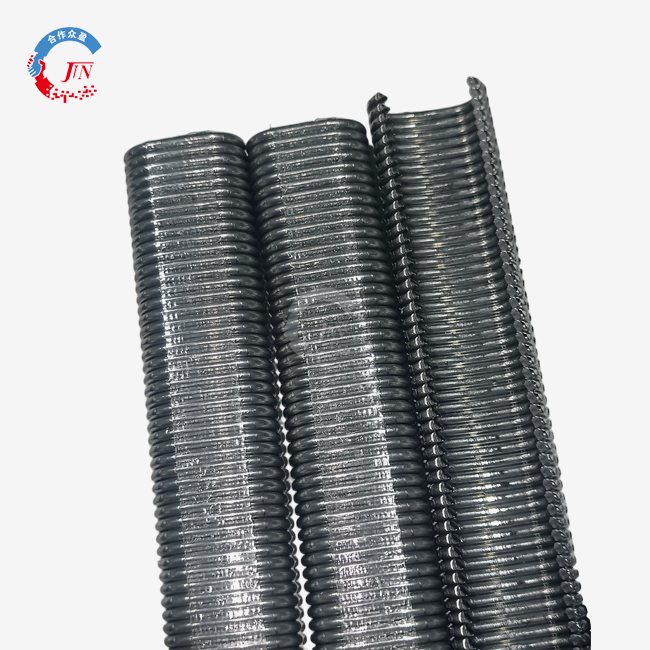
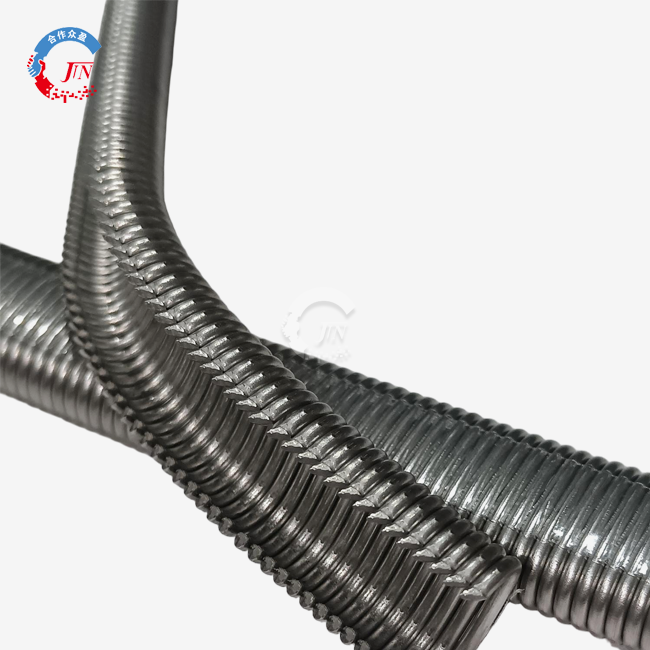
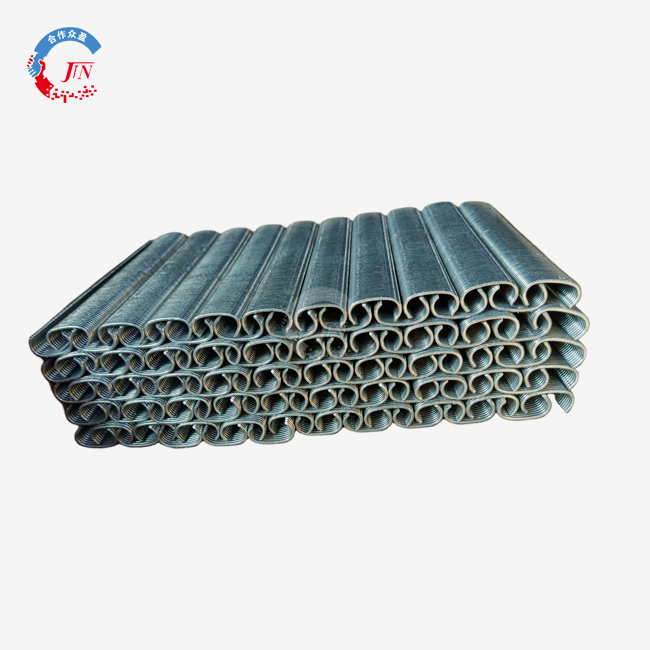
When production lines depend on fastening reliability, the quality of every small component matters. Galvanized hog rings are C-shaped steel wire fasteners coated with a protective zinc layer that blocks moisture, oxidation, and chemical exposure. Whether you are assembling mattress spring units, building poultry cages, or finishing automotive seat upholstery, these rings provide a dependable, cost-effective bond that holds up in harsh conditions. At TJJZ, we produce C17 specification rings (width 16.9 mm, height 8.7 mm) with tight dimensional control, sharp-point geometry, and surface treatments that meet the demands of industrial-scale production.

Understanding Galvanized Hog Rings and Their Corrosion Resistance
When zinc is put on a galvanized ring, it does more than just finish the outside. Through cathodic protection, it acts as a sacrifice barrier; the zinc oxidizes more slowly, stopping any rust from forming on the base steel, even at the cut wire tips after crimping.
Electro-Galvanized vs. Hot-Dip Galvanized
Electro-galvanized rings have a lighter, smoother zinc layer that makes them good for indoor uses like furniture and upholstery, where it's important that air tools feed the rings evenly. Hot-dip galvanized rings have a thicker layer, usually more than 50 microns. This makes them ideal for use outside in places like farm cages, wire fences, and gabion baskets that stop erosion.

How Galvanized Rings Compare to Other Fastener Types?
In wet places, plain steel rings rust quickly, resulting in structural failure and production problems. Stainless steel rings are better at resisting corrosion, but they cost a lot more to make. In real life, galvanized steel rings are a good compromise. They can withstand salt spray testing for 72 to 240 hours or more under ASTM B117 conditions, have tensile strengths of 600 to 1,200 MPa depending on the wire gage, and do all of this for a lot less money than stainless steel options.
Material Options Available at TJJZ
TJJZ makes rings from three different types of material. When it comes to general industry use, galvanized steel has the best cost-to-performance ratio. Zinc-aluminum alloy wire makes rows more stable and resists corrosion better in moderately demanding conditions. Stainless steel versions are made for the harshest environments where chemicals or permanent contact with water are likely to happen.
How to Select the Right Galvanized Hog Rings for Your Project
If you pick the wrong ring gage or size, the tool will get stuck on the production floor, and the joint will break in the finished product. Take a look at these things before you place a large order.
Wire Gauge and Tensile Strength
Lower gage numbers mean thicker wire that can hold more weight. A 9-gauge ring can handle big structural fences and building gabion walls. A 16-gauge or 17-gauge ring is made for attaching seat covers, putting together mattresses, and upholstery. In these situations, the ring needs to be able to crimp cleanly without tearing the fabric or deforming the spring coil. TJJZ has 16G and 17G options in 1/2" and 3/4" sizes to meet the needs of all furniture and cage manufacturers.
Size Compatibility With Your Tool and Application
The normal TJJZ C17 (width 16.9 mm, height 8.7 mm) is made to feed smoothly through standard galvanized hog rings tools and pneumatic hog ring guns. Tool misfires and production downtime are often caused by rings that aren't made by the same company. Our factory has tight control over dimensions, so each ring closes evenly. This keeps the binding force needed for places with a lot of shaking, like car seats.
Matching Ring Type to Industry Application
A fastening ring has to work in a number of different production environments. The table below shows some general tips:
- Mattress & bedding assembly: 17G galvanized, C17 size — clean crimp around spring coil without fabric snag
- Poultry and livestock cages: hot-dip galvanized or alloy, heavier gauge — resists animal waste and outdoor humidity
- Automotive seat upholstery: 16G galvanized — consistent shape under kinetic stress and temperature variation
- Wire fencing and gabion baskets: hot-dip galvanized, 9–12G — structural load resistance in variable soil and moisture conditions
These rules give procurement managers a place to start, but TJJZ also offers sample-based production for customers who need a ring that fits a certain wire mesh standard or a current tool magazine.
How to Properly Use and Install Galvanized Hog Rings?
Even a high-quality ring won't work if the way it's installed isn't constant. The field directly affects the joint's strength and the ring's ability to resist corrosion by the tools that are used and how they are handled.
Choosing the Right Installation Tool
If the ring is a C-type, D-type, or M-type, it must fit the shape of the plier jaw and the magazine. TJJZ C-type rings can be used with both standard gas hog ring guns and hog ring tools that are used by hand. The ring tip's sharp point makes it easier for the tool to penetrate, which speeds up the crimping process and keeps operators from getting tired during high-volume production shifts.
Step-by-Step Installation Best Practice
There are three steps to a proper installation. First, put the ring strip into the tool magazine and make sure the ring is facing the right way on the jaw profile. Second, put the ring around both parts that need to be connected, like a spring coil and the wire grid that surrounds it. Then, squeeze the tool handle or trigger hard until the ring closes all the way. Third, look at the crimp with your own eyes. A ring that is properly closed has no gap at the point where it closes and the zinc coating should not be cracked.
Storage and Handling to Protect Coating Integrity
If rings with zinc coats are kept in high-humidity stores without being protected, they can turn white rust (zinc oxidation) before they even get to the production line. Keep ring strips in sealed containers, away from moisture that can stand. TJJZ ships all of its goods in protective packaging to keep the coating in good shape while they travel from Tianjin Port to other countries.
Procurement Insights: Buying Galvanized Hog Rings for Your Business
Sourcing decisions for industrial fasteners extend beyond unit price. Supply continuity, lead time, and dimensional consistency across large batches directly affect your production output.
Evaluating Supplier Quality and Certifications
Before placing a long-term supply agreement, request zinc coating weight test reports (g/m²), salt spray test results under ASTM B117, and dimensional inspection records for wire diameter and crown width. Reputable galvanized hog rings suppliers maintain traceable quality documentation. TJJZ has operated continuously since February 2015, with established quality control processes from raw material intake through finished product release.
Bulk Order Logistics and Lead Times
Production lines cannot tolerate fastener stockouts. TJJZ maintains standing inventory to support a 3–5 day production lead time on standard specifications. Our location near Tianjin Port allows full-pallet shipping with low cargo damage rates, and our logistics team responds to order inquiries within three minutes during business hours.
Managing Cost Without Sacrificing Consistency
High-volume procurement creates price pressure, but switching to a lower-cost source that delivers inconsistent ring dimensions triggers tool jams, rejected assemblies, and unplanned downtime — costs that quickly exceed any savings on unit price. The smarter approach is to negotiate annual supply agreements with a manufacturer that carries permanent stock and provides dimensional traceability, which is exactly what TJJZ structures for repeat customers.
Future Trends in Zinc-Coated Fastening Technology
There are two clear directions that the industrial fastener market is going: coatings that are thicker and last longer, and tighter integration with automated installation equipment.
Advanced Coating Technologies
Zinc-aluminum alloy coatings are becoming more popular than standard electro-galvanized finishes because they last longer in harsh farming and marine settings without costing as much as full stainless steel. TJJZ already has alloy wire choices for customers whose needs are somewhere between those of normal galvanized steel and stainless steel.
Automation Compatibility
For mattress and car seat production lines to use automated hog ring installation systems, the rings must have very tight size tolerances. Any change in the crown width or wire thickness stops the line because of a feed failure. Precision production with checking of dimensions down to the micrometer level is a must, not a nice-to-have trait.
Sustainable Manufacturing Expectations
International buying teams are being asked to do more about how their sellers treat the environment, especially those that work with Tier 1 car suppliers or branded furniture companies. TJJZ keeps putting money into better ways to make things and more paperwork to help customers report compliance.
Conclusion
At the same price, galvanized hog rings offer a useful mix of resistance to corrosion, mechanical strength, and flexibility with production lines that normal steel or plastic options can't match. Three choices—choosing the right gage, making sure the dimensions fit your tools, and buying from a company with quality records that can be tracked—determine how well your fastening system works over time. Because of their consistent quality and quick delivery, TJJZ has been sending these parts to factories that make mattresses, furniture, cages, and car seats since 2015.
FAQ
What is the difference between electro-galvanized and hot-dip galvanized rings?
Electro-galvanized rings carry a thinner, smoother coating suited for indoor furniture and upholstery applications. Hot-dip galvanized rings have a thicker zinc layer — typically over 50 microns — designed for outdoor and agricultural environments where moisture exposure is constant.
Why do some galvanized rings show rust at the tips?
The cutting process exposes a small amount of bare steel at the wire tip. The surrounding zinc provides cathodic protection that slows oxidation at these points. In aggressive environments, hot-dip or alloy coatings provide additional coverage.
How do I confirm ring size compatibility with my pneumatic tool?
Match the ring style (C-type, D-type, or M-type) to the tool's magazine and jaw geometry. TJJZ C17 rings (width 16.9 mm, height 8.7 mm) are compatible with standard pneumatic hog ring guns used in furniture and mattress production.
What gauge should I specify for mattress spring assembly?
For connecting spring coils to wire border rods in mattress assembly, 17-gauge galvanized rings in the C17 size are the standard specification. They crimp cleanly without tearing surrounding fabric or deforming the coil.
Can I order custom specifications or packaging?
Yes. TJJZ supports sample-based production, customized coatings, wire gauges, and packaging configurations for OEM and ODM customers.
Partner With TJJZ for a Reliable Galvanized Hog Rings Supplier
Since 2015, TJJZ has been selling industrial-grade galvanized hog rings. They keep a steady supply on hand, offer 3–5 day lead times, and provide quality documentation that meets B2B procurement standards. Our C17 rings are now ready to be put on your production line. You can email us at userID@jinzhuangfastener.com or visit jinzhuangfastener.com to send us your specs or ask for a sample. Let's make sure you have the right goods for the job.
References
1.ASTM International. ASTM B117: Standard Practice for Operating Salt Spray (Fog) Apparatus. ASTM International, 2019.
2.ASTM International. ASTM A641/A641M: Standard Specification for Zinc-Coated (Galvanized) Carbon Steel Wire. ASTM International, 2020.
3.Fontana, Mars G. Corrosion Engineering. McGraw-Hill, 1986.
4.Wire Journal International. "Galvanized Wire Coating Performance in Agricultural and Industrial Applications." Wire Journal International, 2021.
5.Brydson, John A. Plastics Materials. Butterworth-Heinemann, 1999. (Referenced for comparative fastener material analysis.)
6.Furniture Today. "Fastening Systems in Upholstered Furniture Manufacturing: Trends and Quality Standards." Furniture Today Industry Report, 2022.
Learn about our latest products and discounts through SMS or email