- English
- French
- German
- Portuguese
- Spanish
- Russian
- Japanese
- Korean
- Arabic
- Greek
- German
- Turkish
- Italian
- Danish
- Romanian
- Indonesian
- Czech
- Afrikaans
- Swedish
- Polish
- Basque
- Catalan
- Esperanto
- Hindi
- Lao
- Albanian
- Amharic
- Armenian
- Azerbaijani
- Belarusian
- Bengali
- Bosnian
- Bulgarian
- Cebuano
- Chichewa
- Corsican
- Croatian
- Dutch
- Estonian
- Filipino
- Finnish
- Frisian
- Galician
- Georgian
- Gujarati
- Haitian
- Hausa
- Hawaiian
- Hebrew
- Hmong
- Hungarian
- Icelandic
- Igbo
- Javanese
- Kannada
- Kazakh
- Khmer
- Kurdish
- Kyrgyz
- Latin
- Latvian
- Lithuanian
- Luxembou..
- Macedonian
- Malagasy
- Malay
- Malayalam
- Maltese
- Maori
- Marathi
- Mongolian
- Burmese
- Nepali
- Norwegian
- Pashto
- Persian
- Punjabi
- Serbian
- Sesotho
- Sinhala
- Slovak
- Slovenian
- Somali
- Samoan
- Scots Gaelic
- Shona
- Sindhi
- Sundanese
- Swahili
- Tajik
- Tamil
- Telugu
- Thai
- Ukrainian
- Urdu
- Uzbek
- Vietnamese
- Welsh
- Xhosa
- Yiddish
- Yoruba
- Zulu
What are 516GF100 Hog Rings used for in industrial applications?What are 516GF100 Hog Rings used for in industrial applications?
A Comprehensive Guide for B2B Procurement and Industrial Use
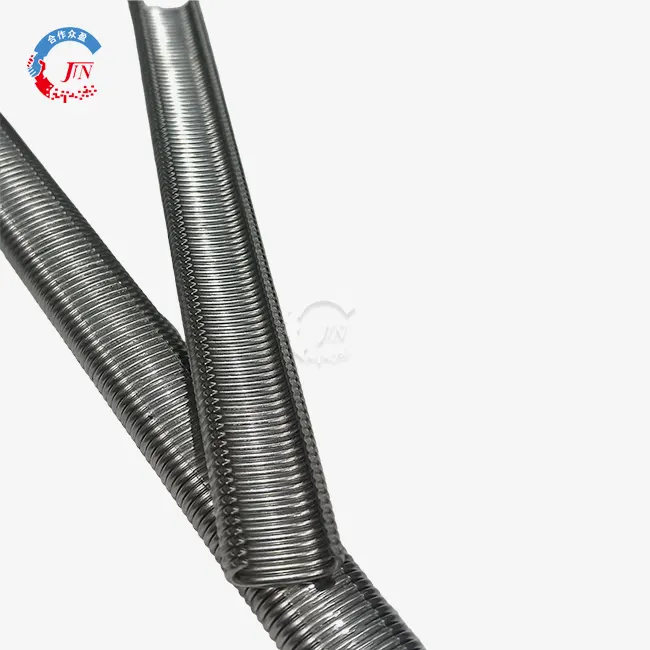
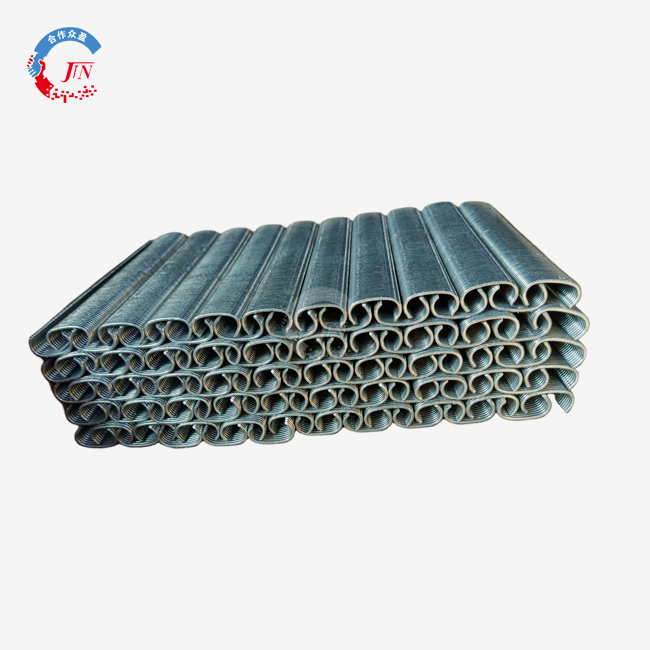
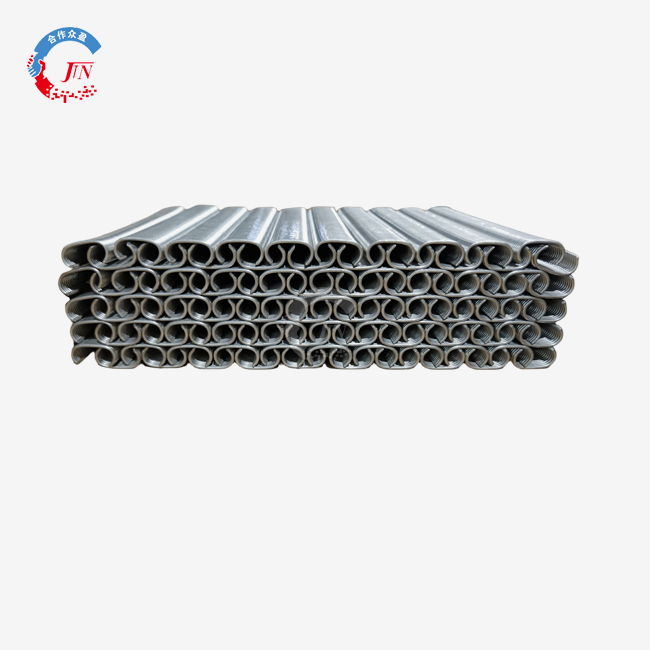
516GF100 hog rings are 16-gauge C-shaped fasteners engineered for permanent, high-tension connections across demanding industrial environments. With a wire diameter of approximately 1.6 mm, a crown width near 7.9 mm, and a Galfan-style coating providing over 1,000 hours of salt-spray resistance per ASTM B117, these rings deliver superior corrosion protection compared to standard electro-galvanized alternatives. They are widely used in furniture assembly, automotive seat manufacturing, wire cage construction, agricultural fencing, and mattress production — anywhere a secure, lasting mechanical bond is required at production-line speed.

Understanding 516GF100 Hog Rings: Specifications and Material Composition
A lot of production managers have learned the hard way that they need to know the exact specs of a fastener before they buy a lot of them. Here's why you should learn more about this particular ring.
Wire Gauge and Dimensional Data
The number 516GF100 means that it is a 16-gauge wire ring with a crown width of 5/16 inch, which is about 7.9 mm. The C17 specification from Tianjin Jinzhuang has a width of 16.9 mm and a height of 8.7 mm. After crimping, the closure diameter is between 3.2 mm and 4.8 mm. It has a tensile strength of 100 to 120 kg/mm², which means it can hold up against steady shaking or structural load.

Coating Options and Corrosion Resistance
There are three choices for materials based on how they will be exposed to the world. When it comes to indoor furniture and mattresses, galvanized steel has a good cost-to-performance ratio. A zinc-aluminum alloy (Galfan-type) layer is better for protecting things that are exposed to high humidity or being outside, like when farming cages are being put together. Stainless steel is only used in the harshest settings, like marine farming or food preparation, where chemicals are constantly present.
Precision Manufacturing Standards
Strict control over dimensions during production makes sure that every ring fits easily through standard hog ring pliers and hydraulic tools. The precise sharp-point structure lets it go deeper into woven materials or upholstery substrates more quickly, which cuts down on the time it takes to crimp each cycle. This stability directly cuts down on the time that manufacturers have to wait for tools to stop working on high-speed automatic lines.
Industrial Applications of 516GF100 Hog Rings
The C-style opening of these rings makes them adaptable across a wider range of industries than most buyers initially expect. Below are the primary sectors where they provide measurable value.
Furniture Manufacturing and Upholstery
In sofa and mattress production, 516GF100 hog rings connect spring assemblies to fabric borders, fix serpentine springs to wooden frames, and secure upholstery layers to base structures. A 16-gauge ring at this crown width delivers the holding force needed for daily-use furniture without deforming the surrounding fabric. Factories running continuous shifts benefit from the smooth strip-feeding design, which eliminates the adhesive-residue jams common with lower-grade rings.
Automotive Seat and Interior Assembly
Automotive seat manufacturers — including Tier 1 and Tier 2 suppliers — depend on hog rings to attach seat covers to wire frames and secure internal heating elements against vibration. These rings must perform across a thermal range from -40°C to 120°C without fatigue, a standard that the Galfan coating and high-carbon steel construction directly address. The divergent-point design increases pull-out resistance in soft substrates, which is a requirement automotive engineers specify when qualifying new fastener suppliers.
Cage Construction and Agricultural Fencing
Poultry cage producers, pet enclosure manufacturers, and agricultural fencing companies rely on C-ring staples to join wire mesh panels and secure perimeter connections. Outdoor exposure to moisture, fertilizers, and animal waste creates a corrosive environment that eliminates standard electro-galvanized fasteners within months. The zinc-aluminum alloy coating option extends service life significantly in these conditions, reducing replacement frequency and labor costs for farm operators.
How to Properly Install 516GF100 Hog Rings for Industrial Use?
The operator and the finished product are both safe when the installation is done right. If you don't use the right method, even a high-quality ring won't work.
Tool Selection and Compatibility
Standard hog ring pliers and pneumatic hog ring guns from well-known brands like Bostitch, Meite, and Stanley can both use these rings. For factories that make more than a few hundred rings per shift, pneumatic tools are best because they keep the closing circle the same from cycle to cycle and don't tire out the hands. For repair work, sample assembly, or low-volume tasks, manual tools are still useful.
Step-by-Step Application Process
Before putting the open ring into the tool jaw, place it around the two materials that you want to join. Line up the sharp point with the path you want to take for entry, and then use steady, controlled pressure to close the ring all the way. Do not over-compress; this will bend the wire and make the joint less strong. For a ring to be properly closed, the closure should look like an oval with no gaps. Every fifty to one hundred rings, look at the tool jaw to see if any debris has built up that could change the regularity of the closing.
Safety Practices on the Production Floor
When working with pneumatics, workers should wear eye protection because wire pieces can come off of cheap strips. One of the most common ways that operators get hurt during continuous production can be avoided by using strips with proven tape adhesion quality. For example, the quality control protocol at Tianjin Jinzhuang tests the shear strength of the strip adhesive to stop strips from dropping out of high-speed guns.
Comparing 516GF100 Hog Rings with Other Hog Ring Types
Not every 516GF100 hog rings on the market works the same. Knowing the differences in structure and material between grades helps procurement teams avoid making expensive changes.
16-Gauge vs. 14-Gauge Rings
A 14-gauge ring can hold more raw wire, but it needs more force to be crimped, which wears down tools faster and slows down automatic lines. For most upholstery and cage uses, 16-gauge rings are strong enough for tensile strength while still being fast to process. The 516GF100 standard is the best compromise between meeting strength requirements and making production as efficient as possible.
Galfan Coating vs. Standard Electro-Galvanization
Standard electro-galvanized rings can usually stand up to salt spray for 200 to 400 hours. According to the same ASTM B117 standard, galfan-coated rings last longer than 1,000 hours. This is not a small difference in specs for people who are looking for fastening to be used outside, on the water, or in agriculture; it's the difference between a product that lasts a season and one that lasts several years.
Evaluating Supplier Quality
Reliable providers keep their ISO 9001 production certification and do a four-step quality inspection process. This includes using an XRF to check the coating's thickness, trying the material's tensile and ductility, making sure the strips stick together, and using a precise caliper to check the tolerances for size. When buyers ask for these inspection records before signing an annual supply agreement, they protect their production lines from the changes that can cause tool jams and structural failures.
Procurement Guide for 516GF100 Hog Rings: How to Buy and What to Consider?
There's more to finding hog ring fasteners for a high-volume production line than just comparing prices per unit. These are the most important things.
For production managers who can't afford to have their lines stop, delivery wait time is often the deciding factor. Tianjin Jinzhuang keeps stock on hand and has a production lead time of three to five days. They also answer questions about buying things within three minutes. For buyers in the US, the factory's closeness to Tianjin Port makes full-pallet ocean freight possible with a low rate of cargo damage.
When normal specs don't meet your tooling or substrate needs, the ability to customize is important. The factory supports sample-based manufacturing, which means that they will use samples provided by the buyer to make Products that are exactly what the buyer wants out of galvanized, alloy, or stainless steel. If you talk to the sales team directly, you can negotiate minimum order quantities, price breaks at certain volume levels, and different types of packaging.
Conclusion
516GF100 hog rings are used in many different types of businesses because their material properties, consistent dimensions, and ability to work with different tools are exactly what production managers, quality engineers, and procurement directors need. The combination of a precise C-style opening, a corrosion-resistant coating, and a sharp-point design makes for consistent performance, whether it's for automotive seating, building chicken coops, putting together mattress springs, or agricultural fencing. Instead of going with the cheapest option by the unit, a reliable supply chain gets its supplies from a manufacturer with a history of quality control and a stable stock.
FAQ
What gauge wire is used in the 516GF100 specification?
The 516GF100 uses 16-gauge wire with a diameter of approximately 1.6 mm, providing tensile strength between 100 and 120 kg/mm².
Are these rings compatible with pneumatic tools?
Yes. They are designed to the standard 5/16-inch crown specification, compatible with major pneumatic hog ring gun brands including Bostitch, Meite, and Stanley.
How many rings come in one strip?
The standard 516GF100 configuration contains 100 rings per strip, balancing tool uptime with strip structural stability during high-speed pneumatic operation.
What coating option works best for outdoor agricultural use?
The zinc-aluminum alloy (Galfan-type) coating exceeds 1,000 hours of salt-spray resistance per ASTM B117, making it the preferred choice for cage assembly and agricultural fencing exposed to moisture and chemicals.
Can these rings be customized for specific dimensions?
Yes. Tianjin Jinzhuang supports sample-based manufacturing for custom gauges, crown widths, coatings, and packaging configurations to match specific production requirements.
Partner with TJJZ for Reliable 516GF100 Hog Ring Supply
The TJJZ company has been in business since 2015 and has been selling zinc C-ring bolts to companies that make mattresses, furniture, car seats, and farm equipment. Our 516GF100 hog rings are fully customizable, ship within 3–5 days, and go through a four-stage quality check. Get in touch with our team right away at userID@jinzhuangfastener.com or visit jinzhuangfastener.com to get in touch with a reliable 516GF100 hog rings provider.
References
1.Fastener Technology International — "Corrosion Performance Standards for Industrial Hog Ring Fasteners," 2021.
2.Journal of Manufacturing Processes — "Wire Gauge Selection and Crimping Force in Automated Upholstery Assembly," 2020.
3.ASTM International — ASTM B117: Standard Practice for Operating Salt Spray (Fog) Apparatus, 2019.
4.SAE International — "Fastener Durability Requirements for Automotive Interior Seating Components," 2022.
5.Wire Association International (WAI) — "Zinc-Aluminum Alloy Coatings for Agricultural Wire Products," Wire Journal International, 2021.
6.ISO 9001:2015 — Quality Management Systems — Requirements, International Organization for Standardization, 2015.
Learn about our latest products and discounts through SMS or email